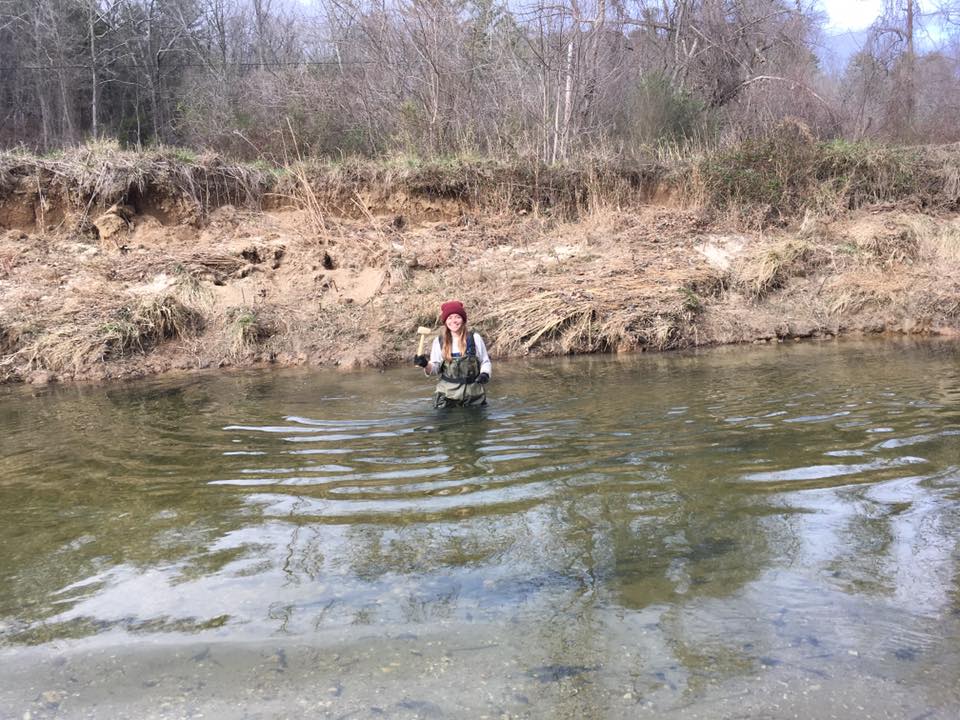
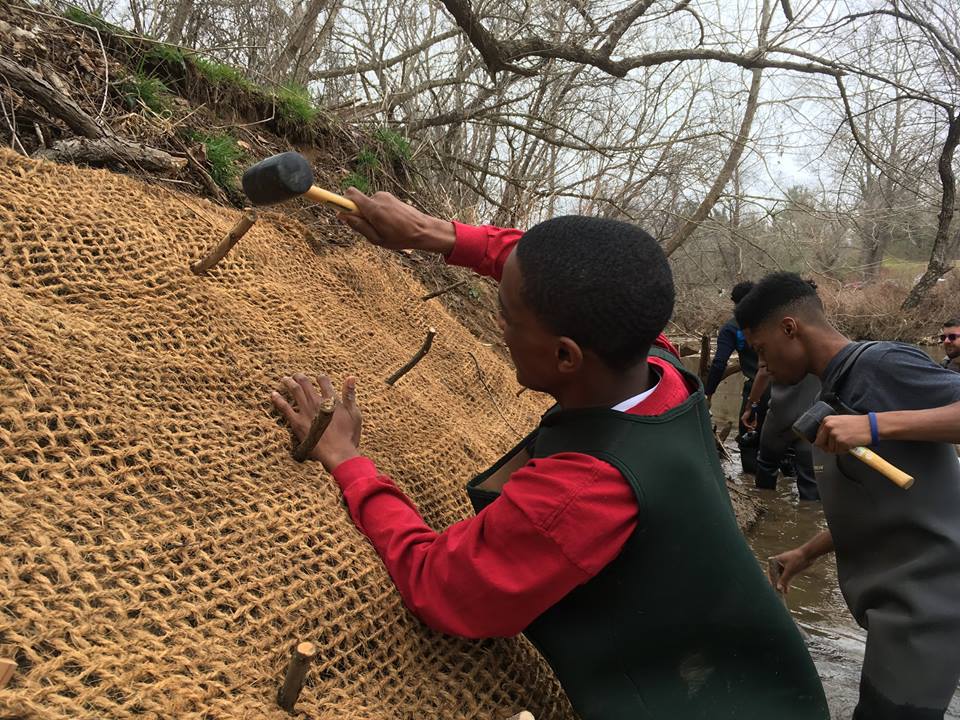
Have you ever been out on your favorite river, gliding by a beautiful green and mossy bank, and noticed what looked like a big bare dirt scar? Chunks of the bank are falling into the water like icebergs, and not even a blade of grass can hold onto the quickly eroding soil.A lot of factors can contribute to such erosion, but the end result is the same, Sediment — the number one problem pollutant impacting our rivers. Sediment is oftentimes not thought of as a pollutant, mainly because it’s not a human-made substance. In reality, it can be severely detrimental to our streams and rivers— smothering aquatic habitats, transporting harmful toxins and raising water temperatures.For the past four months, MountainTrue’s French Broad Riverkeeper team has been hard at work helping to prevent sediment by planting trees along eroded river banks. Certain tree species — silky dogwood, elderberry, silky willow, black willow, and ninebark — can be cut into two-foot “live stakes” and planted near riverbanks.Live staking, as we call it, is a cost-effective and efficient method to mitigate the effects of sediment erosion. The stakes will soon grow into mature shrubs and trees whose root systems will hold their riverbanks in place. In addition to stabilizing the riverbank, these stakes will increase the riparian buffer, helping to slow down stormwater runoff and filter out pollutants. Such a cool project is hindered by only one thing— weather. Stakes can only be planted while the plant is still in it’s winter dormant state. Our over 200 volunteers have braved cold weather and even colder water to hammer almost 10,000 stakes into the ground. We typically cruise the river in canoes to plant our stakes in highly eroded areas, because accessibility by road is not an option. Wintertime paddling can be tricky because of the colder temperatures, so MountainTrue staff watch the weather and cancel if the temperatures get too low. Because this year’s winter was fairly mild, we only had to cancel a few of our scheduled dates. Most work occurred on Cane and Hominy Creeks, but several hundred stakes were also planted on the main stem of the French Broad River near Rosman. Each site was documented with GPS so that we can follow up and accurately guage our success. Budding will start this spring, and we’re excited to paddle by and see our work in progress.Sign up to learn more about volunteer opportunities if you’d like to get involved with planting next year’s live stakes, or any of the other awesome programs protecting the places we share!