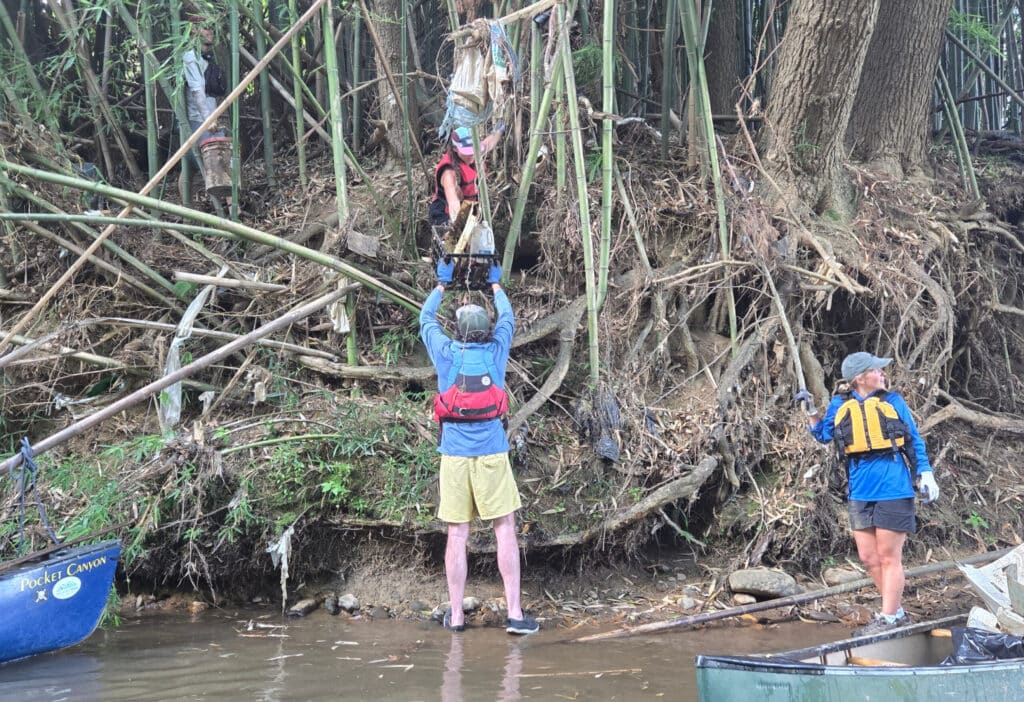
A Partnership with NCDEQ to Help Western North Carolina Recover from Hurricane Helene
MountainTrue, in partnership with the North Carolina Department of Environmental Quality (NCDEQ), is leading a major River Debris Cleanup Program to address the long-term impacts of Hurricane Helene across Western North Carolina. Funded with $10 million in state disaster recovery funds, this initiative will restore rivers, put local residents to work, and support communities still recovering from the storm.
“This is more than a cleanup — it’s a recovery effort that puts people back to work and brings communities together to restore the rivers we all depend on.”
“This initiative represents a critical opportunity to restore our waterways, protect our communities, and support local economies dependent on outdoor recreation and tourism.”
– Reid Wilson, Secretary of the NC Department of Environmental Quality.
Why It Matters
Federal recovery efforts by FEMA and the U.S. Army Corps of Engineers have focused on large rivers and only removed debris posing an immediate public health or safety risk. But throughout Western North Carolina, smaller rivers and tributaries are still choked with debris. These neglected waterways pose real threats to surrounding communities and the region’s vital tourism and outdoor recreation economy.
MountainTrue’s program fills this gap — removing waste, stabilizing streambanks, and helping communities bounce back stronger.
What We're Doing
Now through December 31, 2026, MountainTrue will deploy paid cleanup crews across the storm-impacted region, with work focused in 25 counties and the Eastern Band of Cherokee Indians territory. These crews will work alongside MountainTrue’s network of volunteers and Riverkeepers to remove debris from rivers and streams, restore habitat, and reconnect communities with clean, safe waterways.
With local partnerships already in place on the French Broad, Green, Broad, and Watauga Rivers, MountainTrue is uniquely positioned to scale up recovery efforts quickly and effectively.
Goals and Impact
Removing hazardous dams and advocating for timely dam inspections and repairs.
Rebuilding our cities and towns to be more resilient to flooding and reduce the risk of landslides.
Increasing the supply of stable and climate-resilient housing
Transforming floodplains into public green space
Reaching remote sites that federal dollars can’t cover