As mid-winter settles over the Southern Blue Ridge, MountainTrue’s river debris cleanup teams remain hard at work restoring our region’s rivers and streams, and not just by picking up trash. On a recent warm January morning, dozens of crew members gathered on the banks of the Pacolet River to add organic matter to the water’s edge, rather than remove inorganic matter.
While plenty of debris remains scattered around our waterways, January is the ideal time to focus on restoring streambanks that have eroded or are in danger of eroding resulting in sediment and associated pollutants being dumped into fragile streams. Native plants are the best at preventing streambank erosion, with root systems that spread underground to hold earth in place along the water’s edge, but people often remove plant life at the edge of rivers and creeks for recreational or agricultural reasons.
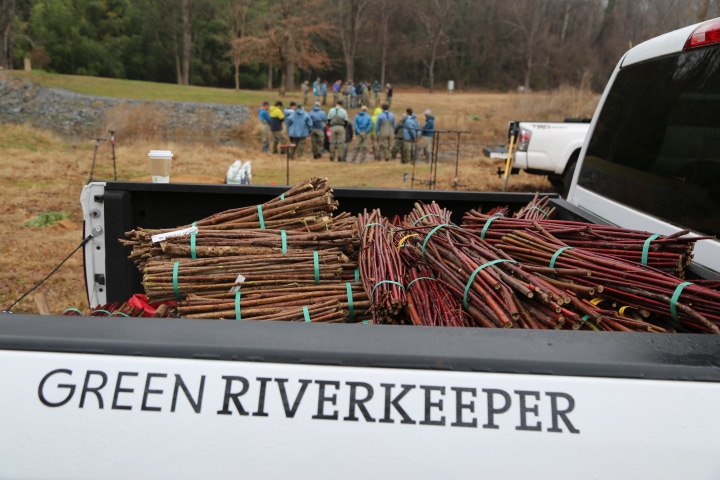
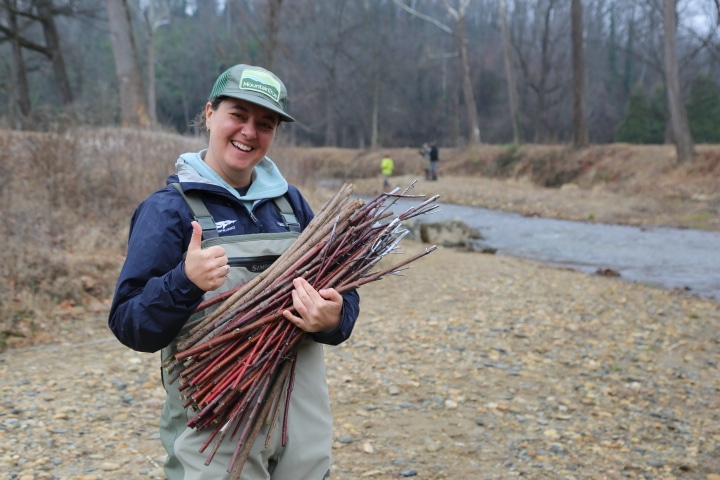
The most cost-effective and sustainable way to ensure streambanks in danger of further erosion are protected is to plant live stakes — dormant cuttings of live native plant varieties that thrive along the water’s edge.
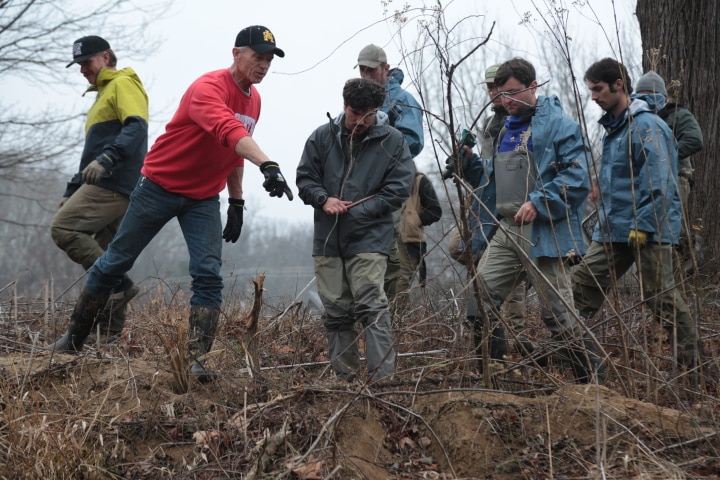
To kick-off the live staking season, Green Riverkeeper Erica Shanks partnered with the N.C. State University’s Biological and Agricultural Engineering Extension office to host workshops for the MountainTrue river debris removal teams at Harmon Field in Tryon this January. More than 60 team members came out to learn the ins and outs of how to plant live stakes, what native plants to use and how to conduct repairs of small-scale bank erosions using natural, low-cost materials.
“Harmon Field is an ideal location because it is accessible to all age levels, from kids riding their bikes and playing basketball, to folks taking their dog for a walk. This is the place Tryon comes together. So we not only get to help protect the well-loved spaces where we recreate but we get to do it where people can engage with the process,” Erica says.
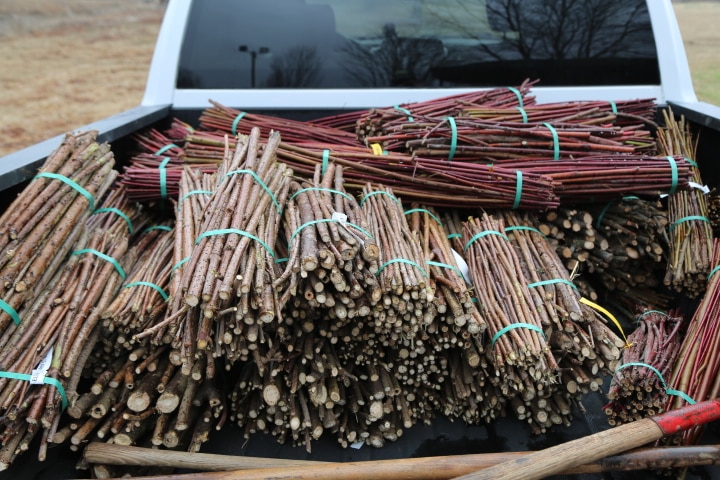
With the generous support of the Community Foundation of Western North Carolina, MountainTrue has purchased about 350,000 live stakes from local and regional plant nurseries and is actively planting them on the banks of rivers and streams throughout the Southern Blue Ridge for the next few months. Members can get involved and learn more by attending one of the workshops co-hosted by the Green Riverkeeper and North Carolina State University (NCSU) February 19-21 in Tryon and Saluda, supported by the Polk County Community Foundation and Polk County Soil and Water.
“After Hurricane Helene, a lot of people have been mourning the loss of special places and reflecting on what they meant to them. These workshops offer a way for more people to engage in a river’s recovery, and inspire folks to realize what these natural spaces can look like again. We hope to empower everyone to give back to their favorite places and rebuild what we lost,” Erica adds.
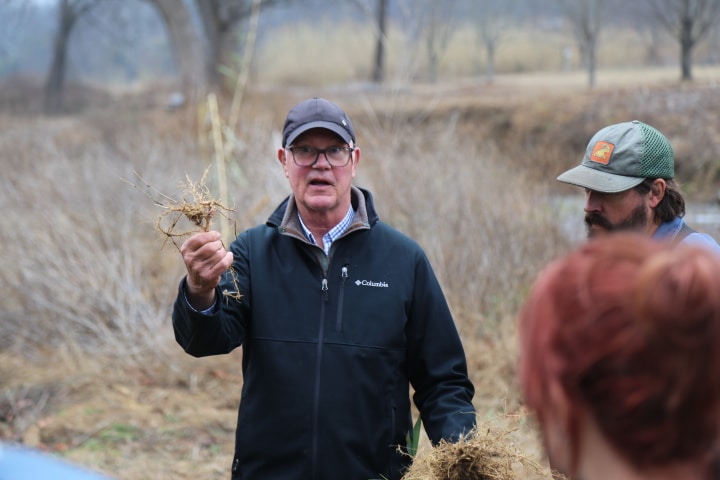
Root mass saves land
The most common mistake land managers make, particularly in public parks where the general public often wants maximum access to the water’s edge, is over-mowing, says Mitch Woodward, specialist on water quality for NCSU’s Biological and Agricultural Extension office. Typical landscape grass has shallow roots and is ineffective at holding streambanks together, and mowing down larger, bushy, woody plants hurts them and limits their ability to prevent erosion.
Native species such as silky dogwood, elderberry, silky willow, buttonbush and ninebark make ideal live stakes, according to NCSU, partially because of their fibrous root systems and tolerance of full sun to part shade. All five are deciduous, meaning they’ll lose their leaves in the fall, and can be pruned to maintain a hedge-like appearance. In addition to these varieties, MountainTrue has obtained live stakes of river birch, black willow, red-stemmed dogwood, and red maple to plant on streambanks.
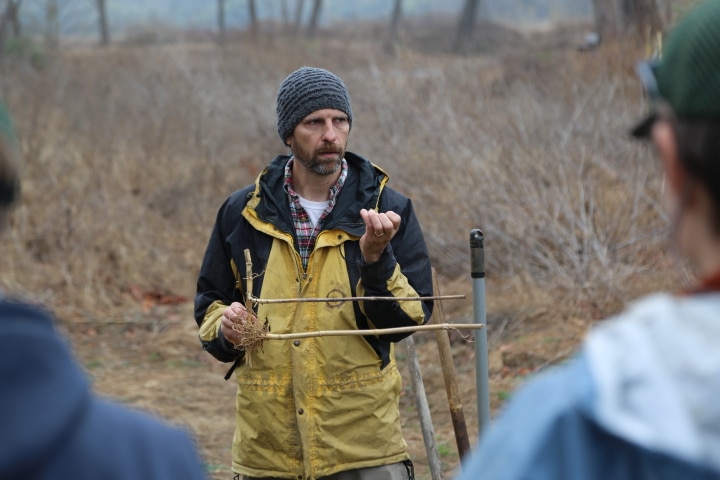
Another prime species for preventing erosion near waterways, says Adam Griffith, extension agent based in Cherokee, is native rivercane. Not to be confused with invasive bamboo varieties that will spread underground via aggressive rhizomes, take over a landscape and crowd out natives, rivercane has been around for generations and was beloved by native peoples like Cherokee who used the plant for everything from home building to basket weaving, Griffith says.
Though native rivercane is a relatively slow-grower compared to invasive bamboo, its underground rhizomes make it the perfect bank stabilizer without over-spreading and crowding out other natives. Anywhere rivercane was found along any WNC river before Helene, the banks remain intact, Griffith says, proving its effectiveness. Plus, it’s easy to transplant, as Griffith showcases at restoration workshops.
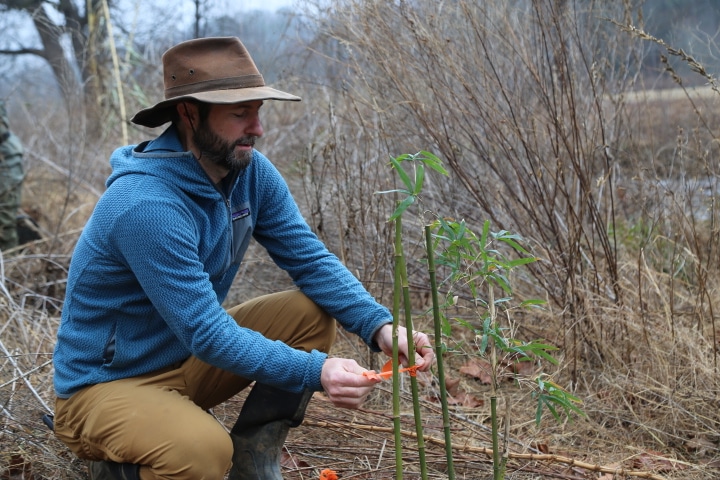
Restoring streambanks
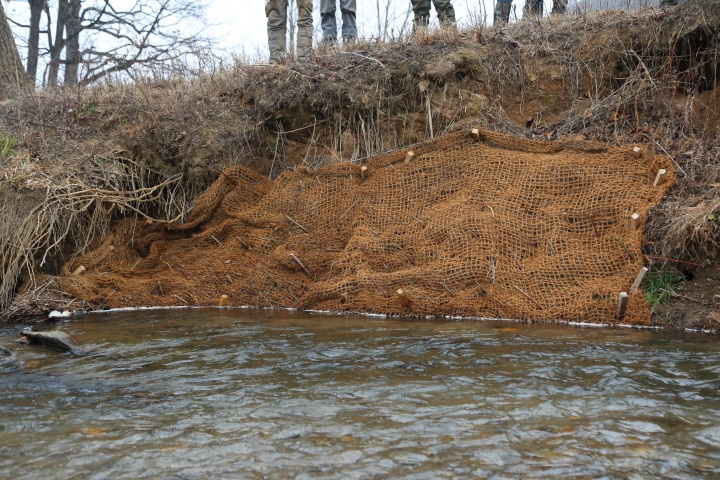
In areas where streambanks are particularly bare or unstable, Woodward recommends placing coir matting over the earth to hold as much soil in place as possible. Often made of coconut fiber that safely breaks down over several years, the matting limits further erosion in places where most vegetation has already been stripped away, and is porous to allow for new growth.
Woodward demonstrates a long, rectangular “mattress” and rolled up “burrito” coir methods to use depending on the status of the streambank. Organic matter such as straw can be layered with the coir to improve its effectiveness at holding back soil, and live stakes can be driven through the coir to eventually cover a bank with plant life.
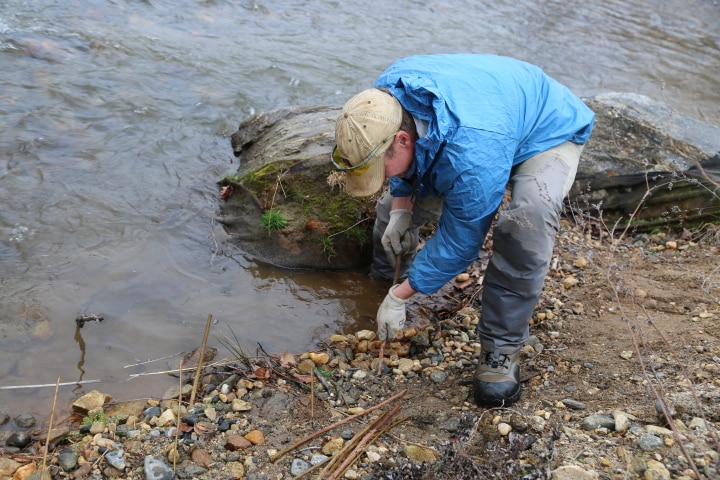
When staking a streambank, the success of each stake relies on accessing water underground, especially as it initially gets rooted. Woodward recommends planting stakes within three feet of the high water mark, as close to the waters’ edge as possible, burying about two-thirds of the stake underground.
At Harmon Field, the site of the MountainTrue training, crew members spread up and down the Pacolet River that runs through the park, applying hundreds of live stakes in a wide range of bare and eroding banks. Riverside parks make particularly ideal places to plant live stakes because of their accessibility and frequent over-mowing to the water’s edge.
High Country events
Not to be outdone, Upper New Riverkeeper Hannah Woodburn has also been leading live staking volunteer events in the high country in the Watauga and Upper New river watersheds.
The first week of January, MountainTrue volunteers and staff planted 3,500 live stakes at Valle Crucis Community Park along the main stem of the Watauga River, Dutch Creek and around a wetland in the park.
High Country Wild, a chapter of the North Carolina Wildlife Federation, donated 1,500 live stakes and snacks for the about 20 volunteers to assist MountainTrue river debris cleanup team members and MountainTrue staff.
Additionally, Woodburn and MountainTrue teamed up with the New River Conservancy January 9 to plant thousands more in Green Valley Park on the South Fork of the New River.
Upcoming workshops
There are many opportunities in WNC this winter to learn more about how to live stake and a stretch of river in your community, including earning certification to lead your own workshop.
NCSU is leading free half-day workshops starting January 23 in Black Mountain, with several more running through February 21 in Saluda. These three-hour workshops will give you the background necessary to jump in on any live staking event, or embark on your own backyard restoration project.
MountainTrue is co-hosting workshops Feb. 19-20 at Harmon Field in Tryon and Feb. 21 on the Green River in Saluda with NCSU, the Polk County Community Foundation and Polk County Soil and Water.
The Green River in particular is rife with significant erosion after Helene and subsequent heavy machinery cleanups have scoured streambanks and caused tons of sediment to wash into the ecologically sensitive and economically vital Mama Green, Erica notes, making it an ideal candidate for live-staking.
Attendees can get certified to lead a workshop at one of NCSU’s full day certification trainings in Brevard, Asheville and Marshall in early February.
Live stakes and the necessary tools will be provided for all training events, and attendees might even be able to take some live stakes home, while supplies last. Signup here.