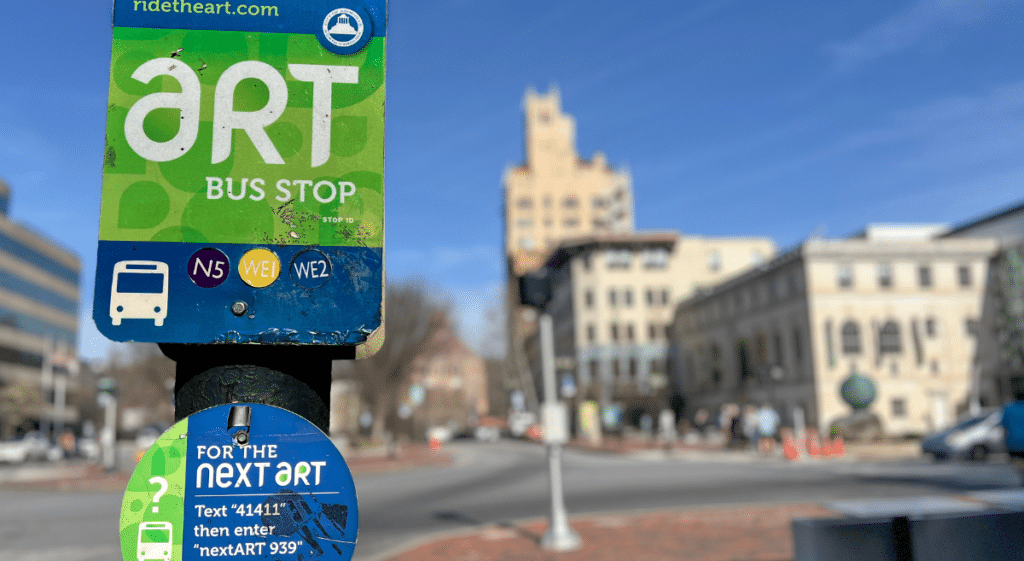
In the face of a $26 million dollar projected budget deficit for the city, the Asheville Regional Transit Coalition has sent a collective letter urging Asheville City Council to increase its investments in our bus system. The system currently faces a steep increase in general operating expenses now that our management contract is up for renegotiation and the costs for staff salaries, fleet maintenance, and other daily expenses have all increased in recent years. In order to maintain the existing service, let alone implement any recommendations from the ongoing study seeking to improve the system, the city must find ways to increase funding for this critical public service. We encourage supporters of transit to read our coalition letter below and to contact members of city council to amplify our call to fully fund this important system.
——
Dear Mayor and Council Members,
ARTC believes that a well-functioning public transit system is vital to achieving the City’s economic, environmental, and equity goals as we recover from Helene. ART is an essential public service that serves the community well; it delivers more rides with lower subsidies per ride than peer systems. We are writing to you because Asheville can’t afford not to fund it adequately, and we advise city officials to commit to not cutting funding to the transit system. Since increasing transit operational costs mean higher prices for the same level of service, the City must identify additional funding to maintain adequate geographical coverage and frequency.
Since transportation is a large source of greenhouse gas emissions, transit is key to meeting Asheville’s sustainability goals. When more residents use transit and buses carry more passengers, fewer private vehicles are on the road, resulting in fewer vehicle miles traveled and lower emissions. Climate change supercharges extreme weather disasters like Helene. Recovery must prioritize climate change mitigation to lessen the risk of future climate catastrophes. Interventions like making the system fare free would increase ridership, catalyzing positive environmental and economic impacts, and make access more equitable.
A strong public transit system is critical for economic growth as we rebuild our economy post-Helene. Funding transit is a smart investment; it can yield five times the economic return due to increases in workforce access and productivity, job creation, decreased transportation costs, and increased tax revenues. Better transit would also be a boon to tourism, allowing visitors to reach attractions and explore Asheville’s food and beverage scene, which will boost ridership, lower road congestion and increase driver safety. These returns benefit transit riders, businesses, and local and state government.
To maintain our commitment to equity, our transit system must continue serving low- income and minority communities affected by inequitable land use practices such as redlining and urban renewal. Land use decisions have often isolated low income and minority communities into areas with poor transit access. While we should avoid the sprawl that results from poor land use decisions in the future, correcting these decisions must not come at the expense of people’s current ability to access transit. Until better land use plans are realized, maintaining transit coverage in these areas is essential to preserving social and economic mobility and preventing deeper inequities. These same communities have long experienced higher risks of environmental pollution/lower air quality and face disproportionate struggles recovering from Helene. Better transit can repair these harms and bolster equity and environmental justice. Transit investments should be viewed not as a stopgap, but as a necessary corrective that supports productive land use, reduces household transportation costs, and ensures that affordable housing remains connected to economic opportunity.
For all these reasons, the City must increase its investment in public transit. New funding sources should be pursued aggressively to ensure adequate frequency and coverage despite higher operational costs. Strategies may include reallocating City funds, redirecting MPO funds, applying for HUD transit corridor funding, and/or working with the county to implement a quarter cent sales tax. As transit advocates, we are ready and willing to work with you all to advance transit opportunities, and appreciate all the effort the city has taken to improve transit for our community.
Sincerely,
Edsel Maggart
Sierra Club of Western North Carolina (organizational signatory)
Rachel Cohen
Sunrise Movement WNC (organizational signatory)
Bob Wagner, Executive Director
MountainTrue (organizational signatory)
Vicki Meath, Executive Director
Just Economics (organizational signatory)
Steve Sprague, President
Amalgamated Transit Union Local 128 (organizational signatory)
Dee Williams
Dee Williams and Company, Inc. (individual signatory)
Harvey Harold, Transit Chair
Transit Committee (individual signatory)
Evelyn Johnson
Sunrise Movement WNC (individual signatory)
Kara Wheeler, Transit Vice Chair
Transit Committee (individual signatory)