BANFF Tickets on Sale Now
Recovery is about more than rebuilding what was lost. It’s about creating stronger partnerships, connecting expertise, and helping communities prepare for the future. That has been the role of MountainTrue’s Appalachian Design Center (ADC) in Hot Springs.
While architects and designers are often associated with buildings and site plans, ADC’s work over the past year has extended far beyond traditional design services. The Design Center has helped bring together local government, nonprofit organizations, state and federal agencies, engineers, volunteers, businesses, and multiple MountainTrue programs to tackle complex challenges that no single organization could address alone.
From coordinating river access improvements and volunteer cleanup efforts to supporting historic preservation, community facilities, recreation planning, and flood resilience, ADC has served as a connector — helping partners identify opportunities, align resources, and move projects from ideas to implementation.
The result is more than a collection of recovery projects. It’s the beginning of a long-term stewardship model, one that treats Hot Springs’ historic downtown, rivers, trails, public spaces, and natural resources as parts of a single, interconnected landscape — a landscape that will keep benefiting from this collaboration long after recovery is complete.
One of the clearest examples of this approach is along the French Broad River and Appalachian Trail corridor, where the Nantahala Outdoor Center’s river access and the U.S. Forest Service’s Silver Mine trailhead sit at the intersection of state, federal, and local interests. Following Hurricane Helene, this corridor became a complex recovery challenge.
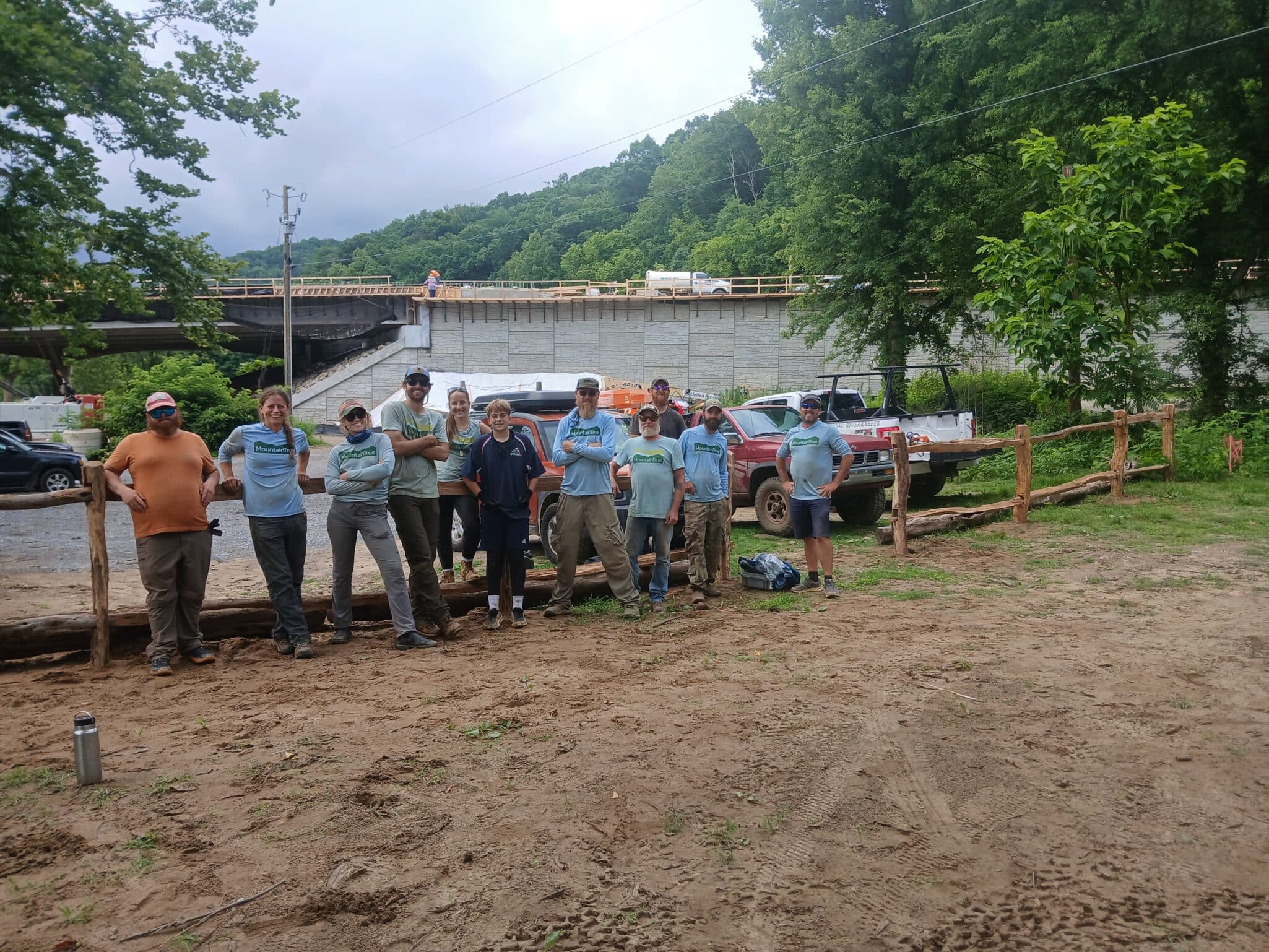
Learning from the community-based organization spearheading recovery in the community, Rebuild Hot Springs has become a beacon of support services for Hot Springs. Rather than approaching each issue separately, ADC worked to support Rebuild in helping establish regular coordination meetings bringing together the Town of Hot Springs, the U.S. Forest Service, Nantahala Outdoor Center, Appalachian Trail Conservancy, Carolina Mountain Club, and MountainTrue staff and volunteers. Together, they worked through everything from property ownership and access agreements to cleanup logistics, volunteer coordination, parking management, bridge assessments, signage, visitor use, and future recreation improvements.
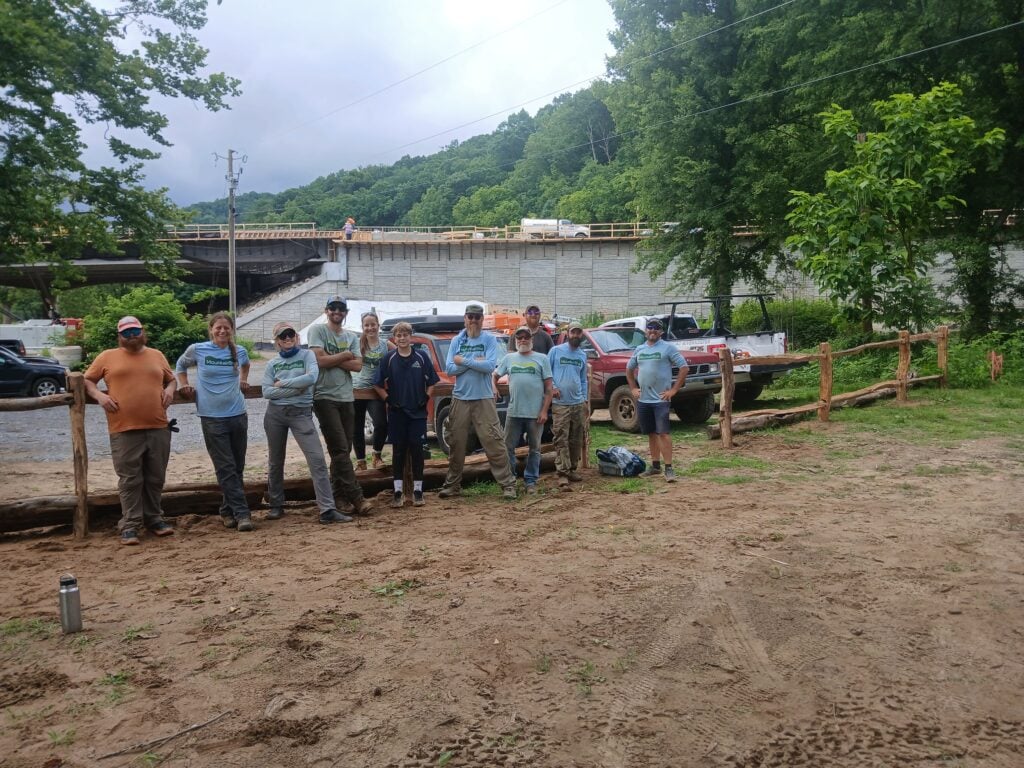
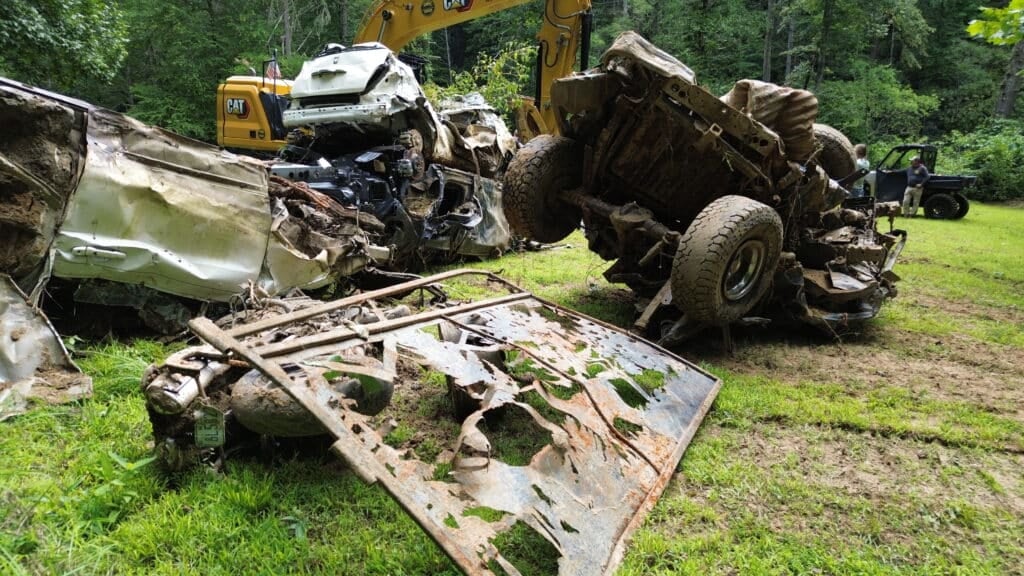
Those conversations quickly translated into action. Partners coordinated contractor work to remove debris, organized volunteer cleanup days, aligned funding across organizations, and clarified jurisdictional questions that had stalled projects for months. They also began planning future investments in trailhead improvements, river access, visitor information, and wayfinding. Rather than duplicating efforts, organizations built on one another’s work and leaned into their individual strengths.
Within MountainTrue alone, the effort has connected four distinct programs — the French Broad Paddle Trail, the Madison County Debris Team, the French Broad Riverkeeper, and ADC — bringing together expertise in river access, restoration, cleanup, recreation, and community planning under a single, coordinated push.
Recovery also created space to address challenges that predated the storm. Conversations that started with debris removal naturally expanded into discussions about visitor safety, trailhead parking, river access, wayfinding, bridge conditions, and long-term stewardship responsibilities. Partners came to see these not as separate projects, but as pieces of one larger goal: a safer, more welcoming, and more resilient recreation corridor for residents and visitors alike.
Volunteer architects and engineers contributed to bridge assessments, historic preservation planning, and site design concepts, while ADC and the project manager connected technical assistance and resources, helping identify funding opportunities, facilitate coordination among agencies, and support community engagement around future improvements. That mix of technical assistance and relationship-building has let projects move forward more strategically, while building local capacity for whatever comes next.
Perhaps the greatest outcome, though, is the stewardship network itself. Organizations that once worked independently are now sharing information, coordinating schedules, leveraging one another’s funding, and planning jointly for future investments — proof that recovery is strongest when it’s collaborative.
As the work continues, the focus is shifting from emergency response to long-term stewardship: improving trailhead design, enhancing visitor information and wayfinding, strengthening river access, restoring historic buildings, and creating community spaces that are both resilient and welcoming. These projects may take years to fully realize, but the partnerships, trust, and collaborative approach built over the past year have laid a strong foundation for Hot Springs’ future. ADC is grateful to have played a role in supporting the collaborative network that continues to move this work forward.