BANFF Tickets on Sale Now
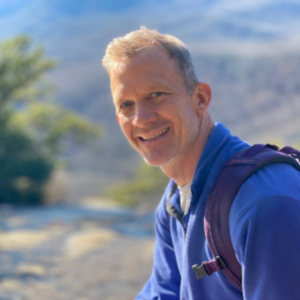
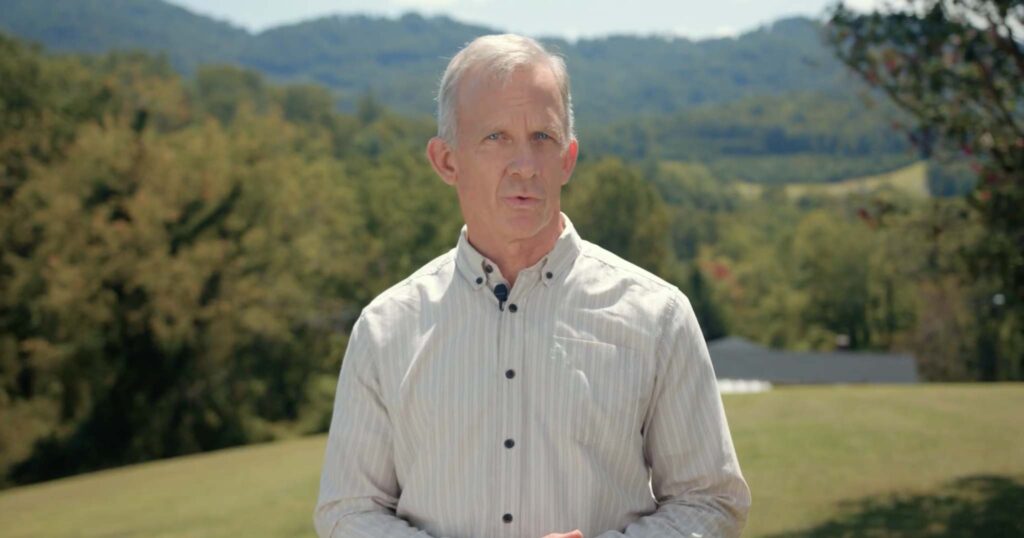
Bob Wagner
Executive Director
My grandfather used to say, “When the going gets tough, the tough get going.” He’d usually follow that with a giant Slurpee—a simple blend of grit and sweetness that made the world feel manageable. This past year, our region faced the devastation of Hurricane Helene, I’ve leaned heavily on that spirit of perseverance.
In the wake of the storm, our communities experienced loss on an unimaginable scale. Yet, amidst the destruction, people showed up for one another. MountainTrue stepped into that moment, shifting from immediate relief—like testing well water and providing meals—to the essential work of clearing our rivers and reimagining our towns through the Appalachian Design Center.
However, recovery cannot simply mean rebuilding what was there before. As storms become more frequent and intense, our response must evolve. We are now focused on resilience: equipping our communities with the resources and planning needed to withstand the climate challenges of the future.
There is still much to be done, but this year has proven our region is incredibly strong. Together, we are turning this difficult moment into an opportunity to restore our waterways and build a resilient future for the places we love.
In 2025, MountainTrue launched its Debris Cleanup Program as a pilot effort to address the widespread impacts of Hurricane Helene on Western North Carolina’s rivers and streams. What began as a targeted, rapid-response initiative quickly demonstrated both the scale of need and the opportunity to pair environmental restoration with economic recovery.
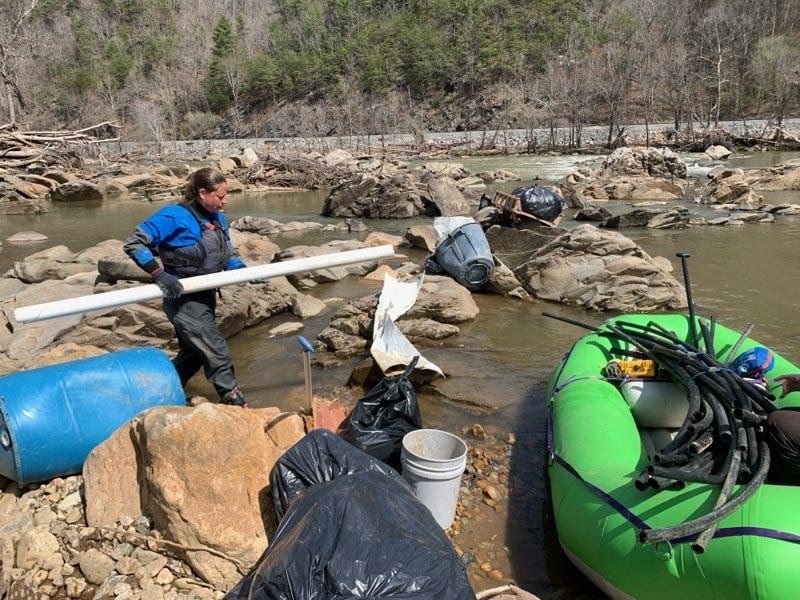
From the outset, our crews focused on removing man-made debris — litter, storm-related waste, and other human-generated materials — from riverbanks and waterways, protecting water quality and aquatic habitat while reducing risks to downstream communities. The pilot created good-paying local jobs, engaged volunteers, and provided direct support to riverfront landowners, proving that recovery work can strengthen both our environment and our regional economy.
Recognizing the program’s early success, MountainTrue elevated debris removal as a legislative priority. Through sustained lobbying and advocacy, we worked with state leaders to secure $10 million in North Carolina state funding to expand the program throughout Western North Carolina. This transformational investment positions the Debris Cleanup Program for long-term impact — demonstrating how on-the-ground action and effective advocacy can deliver lasting results for our rivers and our communities.
With this state funding, we removed 1,007,610.61 lbs of debris, cleaned up 275.66 river miles, restored 2.15 miles of riverbanks, engaged 397 volunteers, and created or supported 104 jobs across the region.
of debris removed
of river and streambank restored
created or supported across the region
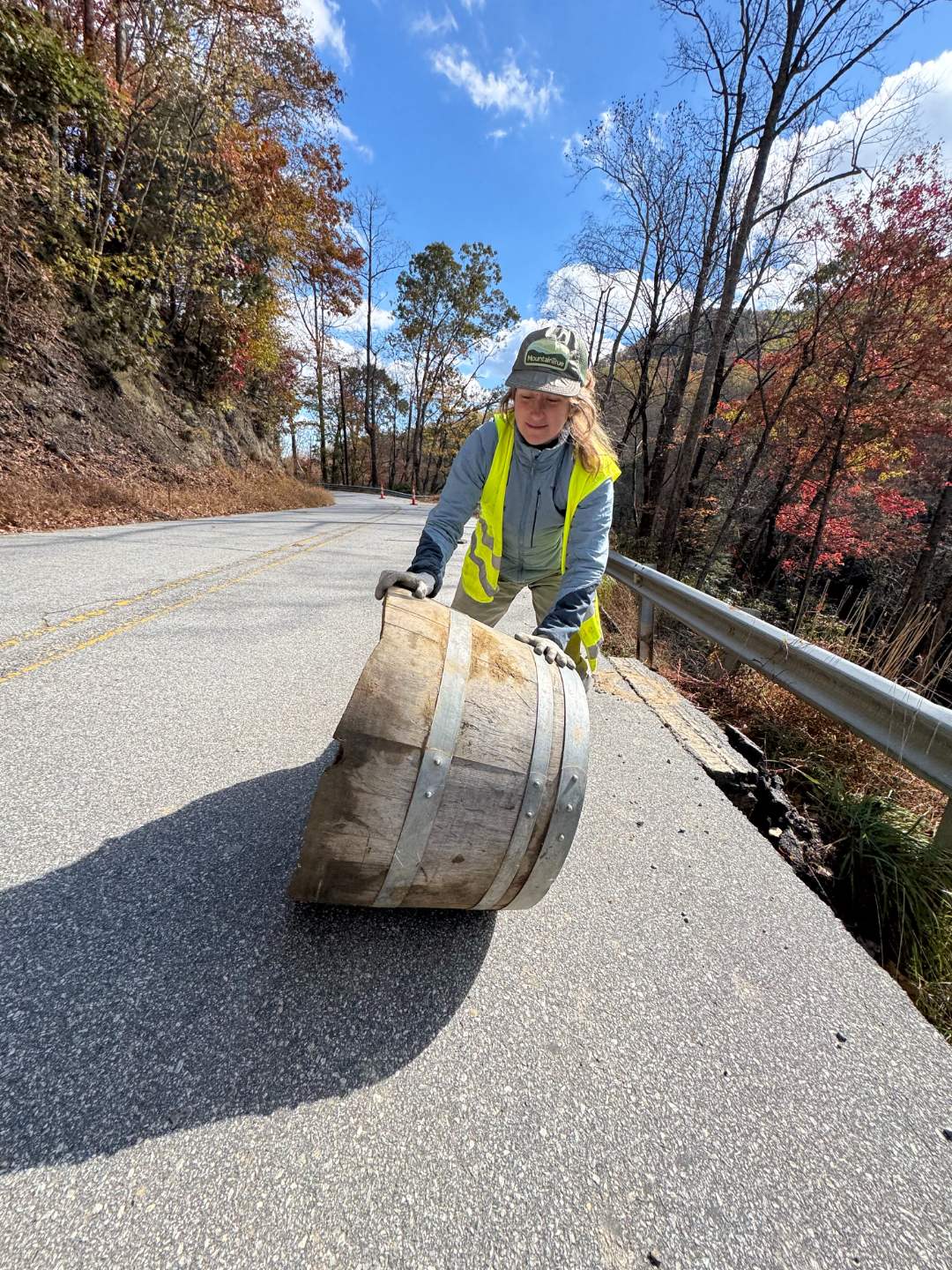
For Donovan Green, an outdoor recreation guide and lifelong climber, the storm hit close to home. “At first, I couldn’t find any silver lining,” she recalls. “Everything I love is gone. My usual Sunday comfort routine — chai at Ultra Coffeebar, walking my dog along the greenway in the River Arts District, and grabbing a beer at the Wedge — all of it disappeared.”
Like many in outdoor recreation, Donovan faced months of uncertainty before ultimately being laid off. After 87 cover letters and 22 job interviews, hope finally arrived in the form of MountainTrue. “When I got the call, I felt a weight lift off my shoulders.”
Throughout 2025, Donovan served as a Team Leader, heading up the intensive debris removal efforts in Chimney Rock and along the Green River. The role provided her with meaningful, steady work that offered a sustainable wage, healthcare, and full benefits. Beyond clearing debris, Donovan used her leadership and management skills to restore our region’s vital waterways and our river-based recreation economy.
At first, I couldn’t find a silver lining […] When I got the call, I felt a weight lift off my shoulders.”
Donovan Green
River Cleanup Team Lead
In 2025, MountainTrue planted 25,400 live stakes to stabilize streambanks damaged by Hurricane Helene — a critical step in addressing sediment, the number one pollutant impacting our rivers. Excessive erosion and sediment can smother aquatic habitat, transport toxins, and raise water temperatures.
To combat this, our debris crews, Clean Waters staff, and volunteers planted two-foot cuttings from native species like silky dogwood, willow, elderberry, and ninebark along vulnerable banks. This cost-effective technique, known as live staking, allows the cuttings to take root and grow into shrubs and trees that anchor soil in place, expand riparian buffers, slow stormwater runoff, and filter pollutants.
Planted in during the winter, these small cuttings will grow to restore streambanks and strengthen our rivers for years to come.
planted to stabilize streambanks
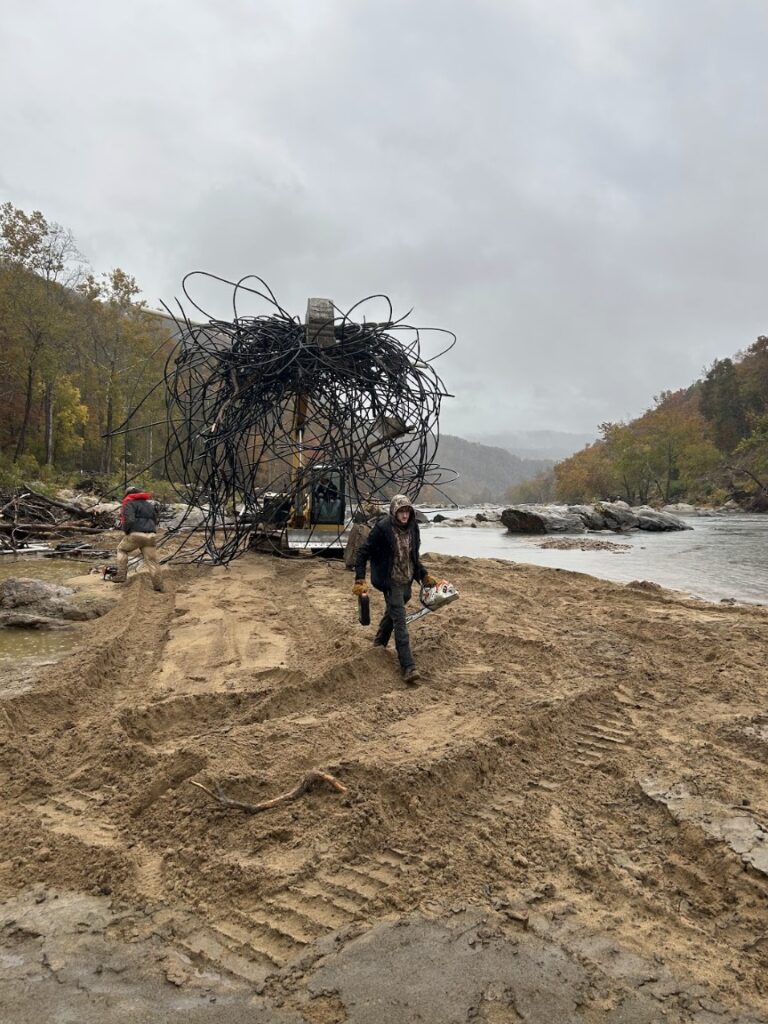
After months of planning and coordination, MountainTrue completed one of the most technically challenging debris removals of the post-Helene recovery: clearing six massive debris piles from the Class III whitewater at Sandy Bottom on the French Broad River. For 11 days over two-and-a-half weeks, MountainTrue’s Madison County and Asheville-based River Debris Cleanup crews partnered with Flowline Energy Services to remove thousands of pounds of storm-deposited waste — including plastic piping, sheet metal, refrigerators, culverts, construction debris, and styrofoam — all tangled with woody material and organic matter.
All six piles were located on the west side of the river with virtually no road access, requiring heavy equipment to cross the river while minimizing disturbance to the riverbed. It was the most challenging and technical job Flowline’s foreman had ever undertaken.
“Initially, I was feeling sick,” said MountainTrue Debris Crew Leader Jemima Filiss-Cook, reflecting on the scale of the damage. “It felt like there was a permanence to it… and that extraction would be like a secondary disaster for the river.”
Instead, the project became a milestone in sustainable recovery. “For us to extract such sizable piles from such a tricky section of whitewater… is huge,” said Jack Henderson, who coordinated the effort. “More broadly, this represents a significant milestone in our recovery.”
Critically, the work was completed with zero substrate disturbance in the lower section — protecting aquatic habitat while restoring safety and beauty to one of the river’s most heavily recreated stretches.
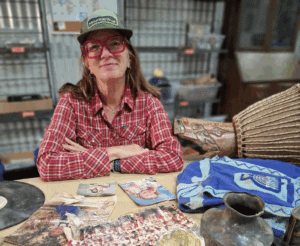
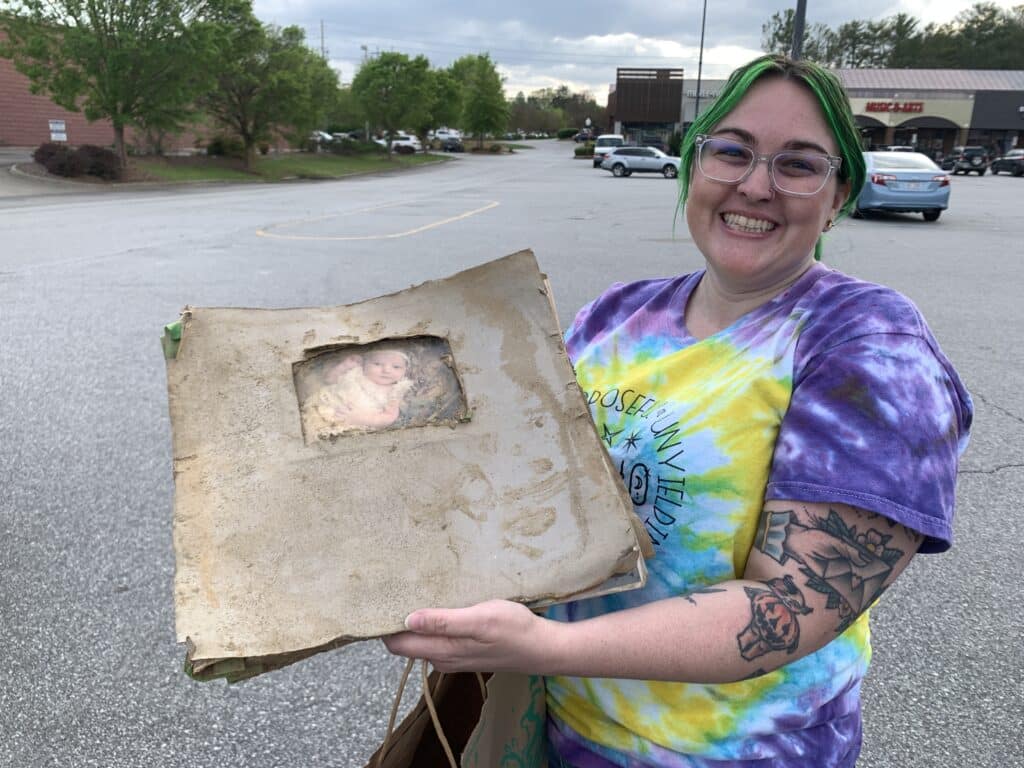
After Hurricane Helene washed through Western North Carolina, MountainTrue’s River Debris Cleanup Program has not only been removing storm debris from local waterways but also helping people reconnect with what they lost. Artifact Recovery Technician Mandy Wallace combs through piles of material pulled from rivers like the Swannanoa and French Broad, rescuing personal items — from photo albums and sports trophies to a cherished coffee mug — that tell the story of lives disrupted by the flood.

Mandy’s unique background in archaeology and deep connection to the rivers inform her work. When crews find objects with personal meaning, she documents and posts them on the new “MountainTrue – Found After the Flood” Facebook page, helping owners identify and reclaim their belongings. To date, nine items have already been reunited with their owners out of more than 121 collected.
What might seem like small artifacts often hold powerful meaning — like a photo album of children now grown or a mug used daily for years. Through this work, MountainTrue is restoring more than rivers: it’s restoring pieces of people’s lives and memories, one found item at a time.
In 2025 MountainTrue received a $750,000 grant from the Truist Foundation’s Western North Carolina Recovery and Resiliency Fund to bolster our River Debris Cleanup Program.
This support didn’t just help extend our response into Eastern Tennessee’s French Broad and Nolichucky watersheds — it also strengthened our ongoing cleanup work in Western North Carolina, supplementing state funding and allowing us to operate longer, hire additional technically skilled crews, and reach more hard-to-access areas impacted by Hurricane Helene.
The Appalachian Design Center (ADC), a program of MountainTrue, helps communities across Southern Appalachia connect with the expertise and resources needed to advance locally driven recovery, resilience, and community development projects.
The program builds upon the legacy of the Asheville Design Center, which merged with MountainTrue in 2017 after years of supporting community-based design work in Asheville. After Hurricane Helene devastated communities across the region, it became clear that many places lacked the local capacity to navigate recovery planning, access technical expertise, and prepare projects that could align with available funding opportunities. In response, the program was revitalized and expanded as the Appalachian Design Center to serve communities throughout the broader Appalachian region.
Early support from program funders—including the Community Foundation of WNC, WNC Bridge Foundation, Community Foundation of Henderson County, The Conservation Fund, Fernandez Pave the Way Foundation and Dogwood Health Trust—recognized this gap and made it possible to establish a dedicated team to guide the work. Each community engaged with ADC is supported by a project manager who helps build relationships at the local level, facilitate community conversations, and coordinate volunteer professionals.
In practice, ADC provides the capacity and coordination needed to develop plans and designs that position projects for funding and implementation.
ADC’s philosophy centers on a community-driven design process. The program works where communities invite support and emphasizes listening first—ensuring that local voices guide the priorities, ideas, and solutions that emerge.
What began with early support for community engagement in Swannanoa grew into a broader regional effort. By the end of 2025, ADC had grown to a team of five project managers supporting work in six communities including Swannanoa, Hot Springs, Marshall, Bakersville, Marion & Spruce Pine, with additional communities and counties preparing to engage the program in the coming year.
Following Hurricane Helene, the Appalachian Design Center began working in Swannanoa—one of the areas hardest hit by the storm. As an unincorporated area without dedicated local staff, Swannanoa faced significant challenges navigating recovery and identifying priorities.
ADC played a central role in convening residents and partners through an ongoing series of engagement sessions to gather input and clarify recovery priorities. ADC also helped ensure that local perspectives informed Buncombe County’s Small Area Plan for Swannanoa.
One project that emerged from this work is the Swannanoa Resilience Hub, a space designed to strengthen coordination, services, and preparedness in the community.
ADC coordinated a volunteer team of architects, engineers, and site designers to assess an existing building and develop plans for the hub, incorporating ideas gathered from the community such as a food pantry, case management offices, and community gathering space. More than 410 hours of professional expertise were contributed through this effort, helping position the project to pursue funding and move toward implementation. The project offers a model for a community hub design that could be replicated in other communities across the region.
Our town—Bakersville, North Carolina—was devastated by Hurricane Helene. With a population of about 450 and a very limited tax base, the storm hit us hard. Trees and power lines were down, homes and businesses damaged, and flooding washed out parks, roads, and much of the area along our creek. We simply didn’t have the capacity to bring together the kind of professional expertise needed to move recovery forward. Through the Appalachian Design Center, that support became possible. Their work has helped us clarify our priorities and begin shaping projects that align with funding opportunities, giving our town something we didn’t have before: a goal and a direction.”
Andy Palmer
Bakersville Beautification Association President

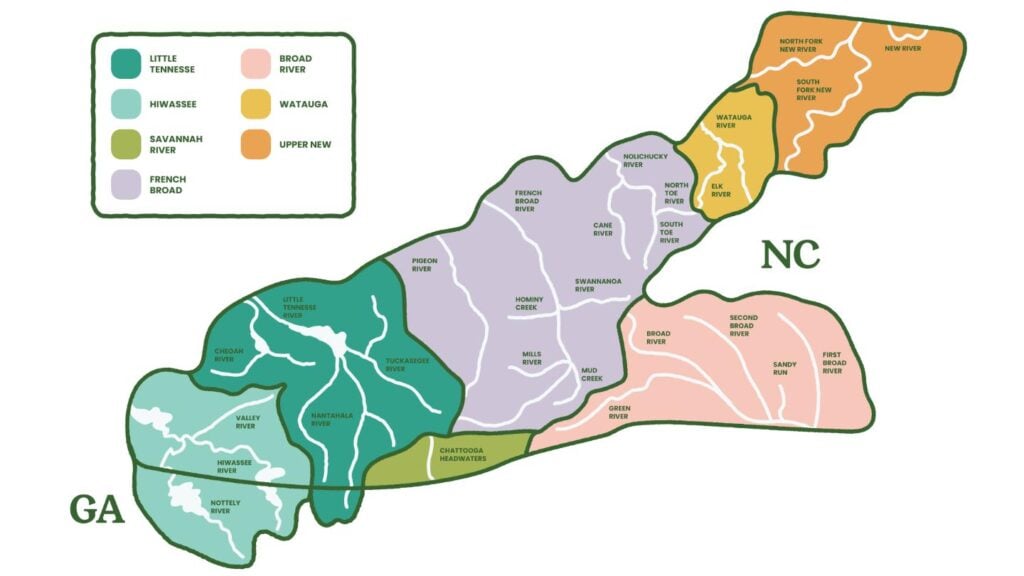
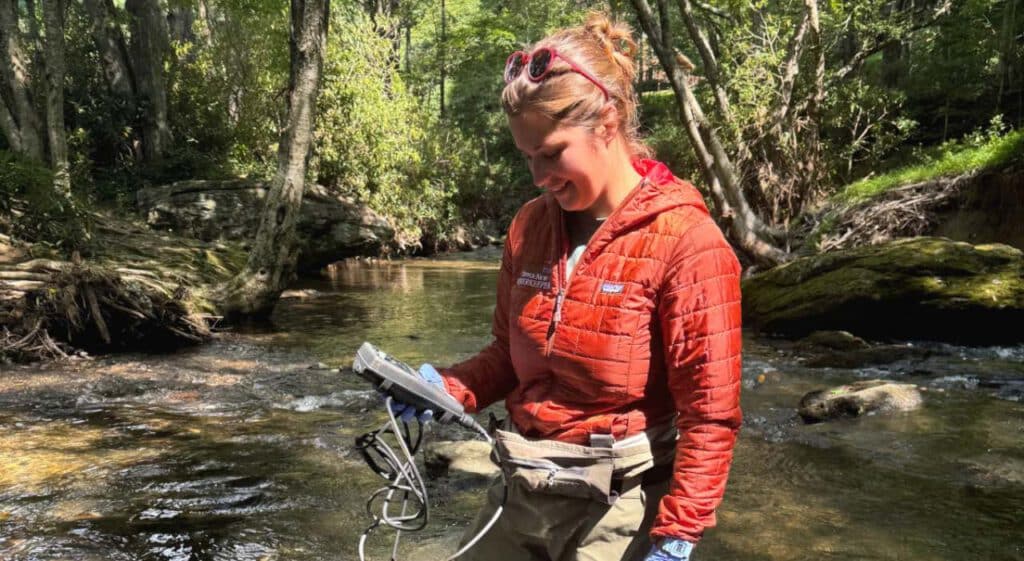
Each summer from May through September, MountainTrue’s Riverkeepers and dedicated volunteers collect weekly water samples across 11 river systems — including the Broad, French Broad, Elk, Green, Hiwassee, Little Tennessee, Nantahala, New, Nottely, and Watauga watersheds — to support our Swim Guide program. This effort provides up-to-date information on water quality so people can make informed decisions about where it’s safe to swim in time for the weekend. But Swim Guide is more than a recreation resource: the data we gather helps us identify and track sources of bacterial pollution, uncover trends, and push for better policies that protect long-term river health.
Swim Guide Sites Monitored
of river and streambank restored
Taken
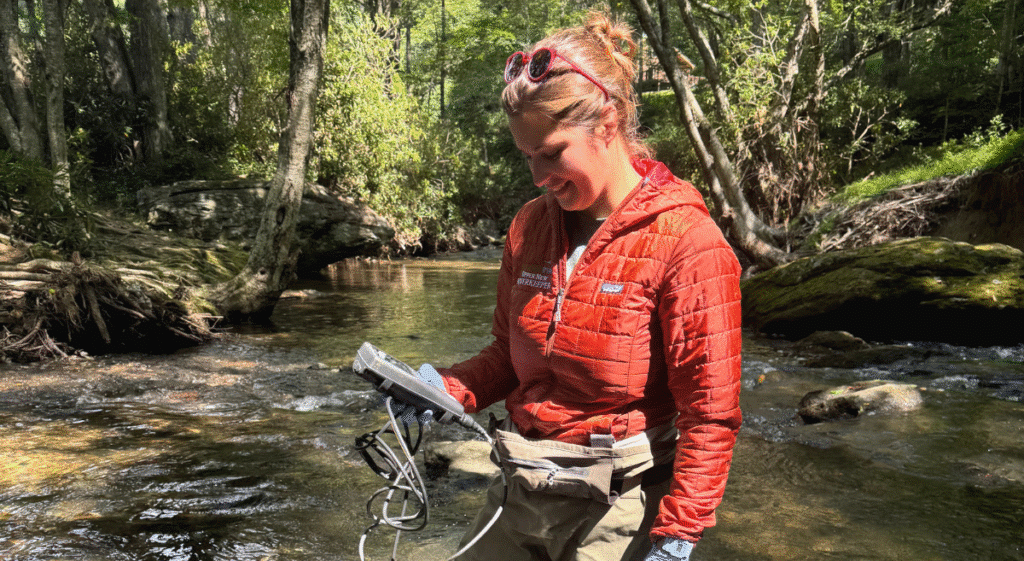
In 2025, we proudly promoted Hannah Woodburn to serve as MountainTrue’s inaugural Upper New Riverkeeper, expanding our Riverkeeper program in the High Country. A North Carolina native with a Master’s in Biology and a Bachelor’s in Ecology, Hannah had already been a vital member of MountainTrue’s Clean Water Team since 2020, most recently serving as Watershed Coordinator for the High Country. Her strong scientific background, combined with deep roots and trusted relationships in the community, made her uniquely suited to step into this leadership role. In her new position, she led water quality monitoring, pollution response, and community partnerships throughout the Upper New River watershed.
In 2025 MountainTrue continued its Resilient Forests work to protect and restore healthy native habitats threatened by non-native invasive species. Through targeted removal and strategic management, we reduce invasive plants that crowd out native flora and damage forest ecosystems — giving native species space to rebound. As part of this effort, we also identified and treated priority ash groves at risk from the invasive emerald ash borer, a beetle devastating ash trees across the region. To date we’ve treated more than 1,100 ash trees and committed to continuing long-term care to help these iconic trees survive and thrive. These projects support biodiversity, strengthen forest resilience, and safeguard the natural heritage of the Southern Blue Ridge Mountains.
Invasive Workdays Conducted
Invasive Plant Volunteers
In 2025, MountainTrue hosted its largest BioBlitz to date, bringing together 83 volunteers and members in the Hickory Nut Gorge for an afternoon of discovery and community science. Participants made nearly 700 observations representing more than 300 species of plants, animals, and fungi — from salamanders and bumblebees to mushrooms and mosses. The ninth annual event set an attendance record and reflected growing community enthusiasm for hands-on conservation.
BioBlitz is more than a species count. By documenting biodiversity in a concentrated area over a short period, we generate valuable data that helps scientists track ecological changes across our region. This year’s findings included 165 plant species, 61 fungi, 53 insects, and even the telltale “flagging” of Brood 14 cicadas — a 17-year emergence event.
Just as important, BioBlitz builds relationships — between people and place, and across generations. Volunteers learned from expert naturalists, shared knowledge across specialties, and inspired the next wave of conservation leaders. What began in 2016 as an advocacy effort to protect Bluff Mountain has grown into a beloved annual tradition that strengthens both science and community — one species at a time.
Bioblitzers
observations
species documented
with $1,608,348 carryforward / $5,814,310 w/o removing carryforward
Members and Individual Donations
Business and Organizational Giving
Grants
Event income
Contract Services
Miscellaneous
Clean Water, Resilient Forests, and Healthy Communities
Administration
Fundraising
Marketing
Debris Cleanup Staffing
Contracted Spending
Property & Equipment
Admin
All Trails
Appalachian Trail Conservancy
Bass Pro Shops
Beattie Foundation
Blumenthal Foundation
CFWNC
Community Foundation of Henderson County
Dogwood Health Trust
Fernandez Pave the Way Foundation
French Broad Crossing Madison Co. Foundation
Glass Foundation
Madison Co TDA
North Carolina Community Foundation
Polk County Community Foundation
RHI Legacy Foundation
Soulshine Concert Fund
The Conservation Fund
Transylvania County TDA
Welcoming Neighbors Network
WNC Bridge Foundation
Z. Smith Reynolds
Zedeck Social Justice Fund