BANFF Tickets on Sale Now
See the text of Susan’s OpEd below, or read it on the Citizen-Times website here.
In January, a young professional attended a networking event in downtown Asheville wearing a sweatshirt with a simple slogan: “Legalize Housing.” Amid the buzz of small talk and handshakes, it was easy to miss, but it captured a reality many Asheville residents are feeling every day.
Housing scarcity is no accident. In Asheville, new homes are routinely disallowed in two ways: through zoning rules that sharply limit what can be built, and through community pressure that urges elected officials to reject new development. Together, those forces shape where housing choices exist. As the city prepares to revisit our comprehensive plan and rewrite our decades old development ordinances in the next two years, we should think carefully about the call to action: “Legalize Housing.”
The simple truth is: Asheville has a housing shortage. According to a 2025 Housing Needs Assessment report from Bowen National Research, it must add more than 10,000 homes to its supply in the next five years to keep up with demand.
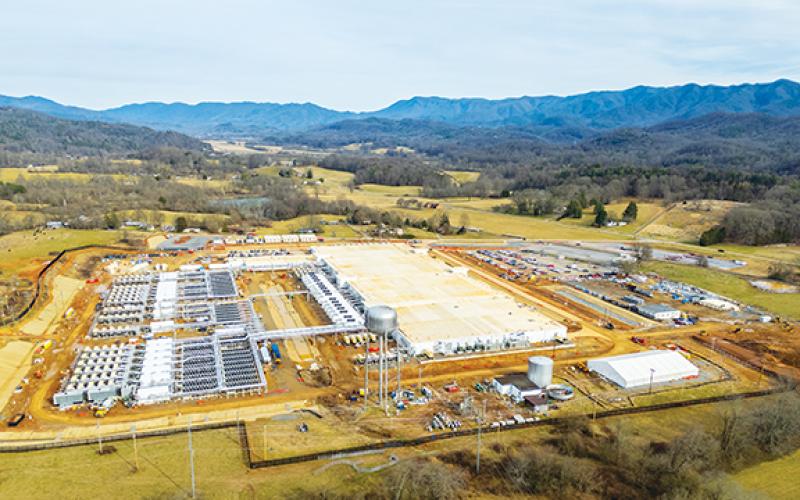
So, when we rally against new development in existing, established neighborhoods, where are we pushing the city’s growth? The need for homes doesn’t disappear just because we oppose it in our own backyards. It moves instead to the outskirts, beyond the reach of city infrastructure, to wooded hillsides where native species once thrived. It turns scenic valleys and vistas into sprawling suburbs, pushing people farther from jobs, schools and services and creating congested commuter corridors on once-rural roads.
As MountainTrue’s housing and transportation director, it’s my responsibility to address how housing, land use and environmental protection are connected — and to help educate and advocate for policies that move us in the right direction. After all, urban sprawl affects everything from how far we commute to how much land and energy we consume, and it’s largely the result of rules that make it harder to build the kinds of homes many people actually need.
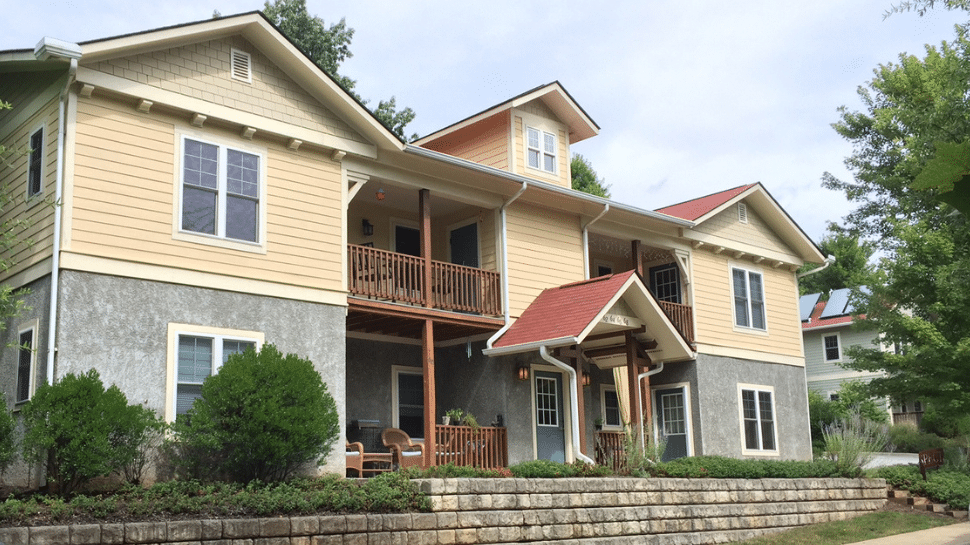
“Missing middle housing” refers to housing types that fall between single-family homes and large-scale apartment complexes — homes like duplexes, triplexes, or townhomes, which have largely been missing from the residential housing market over the last 70 years. In addition to being more affordable, these types of homes are more energy efficient than single-family detached homes.
What’s often lost in today’s debates is that Asheville already contains examples of a better approach. Take a walk around Montford, West Asheville or Kenilworth, and you’ll notice these old neighborhoods were built with a mix of housing types: single-family homes alongside duplexes, small apartment buildings and accessory units. These neighborhoods are walkable, desirable and full of life. Property values have not suffered. In fact, they continue to rise.
Other cities facing similar pressures have begun to change course, and their progress has been encouraging. Portland, Durham and Raleigh have updated their rules to allow smaller homes on smaller lots, duplexes and other modest multi-unit buildings in more places. Importantly, these changes did not lead to widespread demolition or falling property values. Instead, they created more homes per lot and more options for buyers and renters alike.
These reforms have shown that adding housing does not dramatically alter the nature of a neighborhood or city. Small adjustments — allowing a duplex instead of a single house, or dividing a large lot — can make a meaningful difference. They also help ensure that growth happens where it makes sense: in the city limits, where infrastructure like sidewalks and transit already exist.
Stabilizing costs for existing residents, protecting renters from displacement and preserving naturally occurring affordable housing are all essential. But stabilization alone is not enough. Without creating more new housing choices, we will continue to see prices rise and sprawl accelerate outward, making Asheville less accessible to everyone.
Asheville needs more homes in the right places. By building in and up within the city limits, we can protect the natural landscapes that define this region, while also creating better-connected, more walkable neighborhoods for all to enjoy.
Asheville has an opportunity to grow more thoughtfully by allowing a wider range of housing types in more neighborhoods. This approach supports affordability, reduces pressure on undeveloped land and aligns with our commitments to sustainability and community health. The question is not whether Asheville will grow, but whether we will guide that growth in a way that reflects who we are and what we value.
Susan Bean is the housing and transportation director for MountainTrue, an Asheville-based nonprofit that champions resilient forests, clean waters and healthy communities in the Southern Blue Ridge.