
BANFF Tickets on Sale Now
Appalachian Design Center › Bee Log
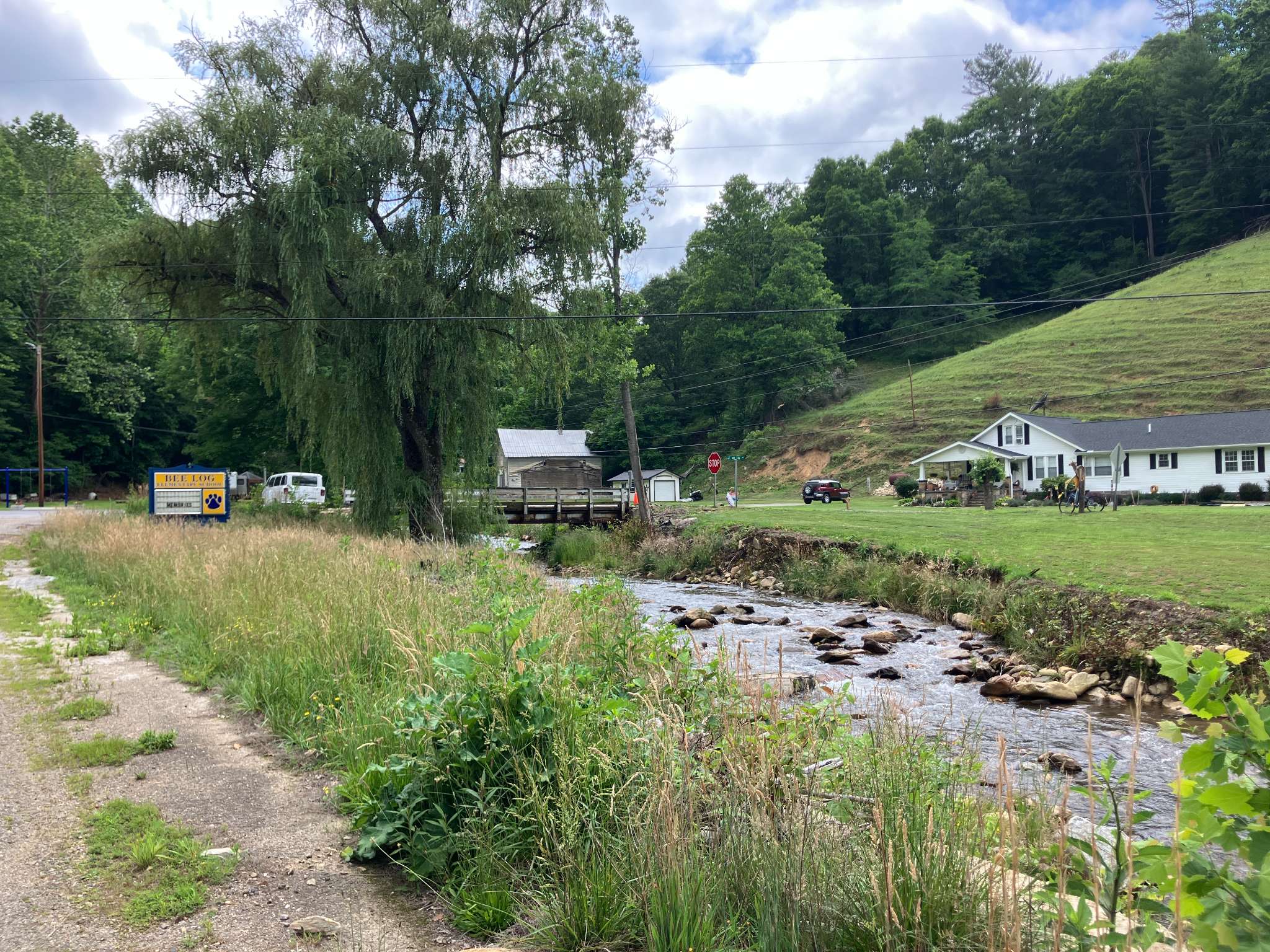
Bee Log is a remote mountain community in northern Yancey County. When Hurricane Helene devastated the Highway 19W and Cane River corridor, washed-out roads and damaged bridges left many residents cut off from supplies and outside support. The destruction of the nearby Riverbank General Store—described by local leaders as one of the only places residents could purchase basic necessities—made an already difficult situation even more acute.
As access remained difficult, neighbors and volunteers built a local response from what they had. The former Bee Log Elementary School, a familiar community building that was partway through renovation and lacked electricity, heat, bathrooms, and running water, became an emergency supply hub. From that unfinished space, volunteers organized food, water, fuel, clothing, and household necessities for Bee Log and other hard-to-reach rural communities. What began as an improvised grassroots response grew into the Bee Log Community & Relief Center, a locally-led nonprofit rooted in the community it serves.
The Center’s vision carries that experience forward: to establish a permanent, resilient community resource designed for everyday—or “blue-sky”—use, with the flexibility to pivot into emergency response when needed. Its potential extends beyond disaster relief. By bringing services, programs, gathering space, and preparedness resources closer to residents, the Center can strengthen day-to-day community connection while building long-term resilience in a rural area where access remains a defining challenge.
The Appalachian Design Center is working with the Bee Log Community & Relief Center to translate this community-led vision into a practical planning and design foundation. The process begins with listening to local leaders, volunteers, and residents to understand how the Center has served the area, how community needs are evolving, and how a lasting facility could support Bee Log over time.
The work brings together community engagement, program planning, site evaluation, and professional design and planning expertise to shape a facility that can support community services, shared uses, and emergency response. This approach is helping establish a clear path for decision-making, partnerships, fundraising, and implementation while keeping local knowledge, capacity, and experience at the center.
Bee Log Community & Relief Center
Pat Kappes, Project Manager.