MountainTrue’s Appalachian Design Center (ADC) is supporting communities across Western North Carolina as they move local recovery and resilience priorities toward clearer, more actionable plans.
ADC connects communities with volunteer design and planning professionals who provide pro bono conceptual design support. Through a listening-first, community-driven process, ADC helps local partners explore what is possible, understand site constraints, and develop design guidance that can support future funding and implementation.
In recent weeks, three ADC-supported projects reached important milestones in Hot Springs, Bakersville, and Marshall.
Hot Springs: Community Center and Old Jail Engagement + Design
In Hot Springs, ADC is working with the Town of Hot Springs and Rebuild Hot Springs Area to explore feasible, community-supported paths for restoring and adaptively reusing the Andrews Avenue Community Center and Old Jail.
The project is focused on how these downtown buildings can become resilient assets that strengthen community life, entrepreneurship, remote work, small business development, and provide a place for gathering. One reuse scenario under consideration includes the potential for a co-working and small business incubator within the Old Jail.
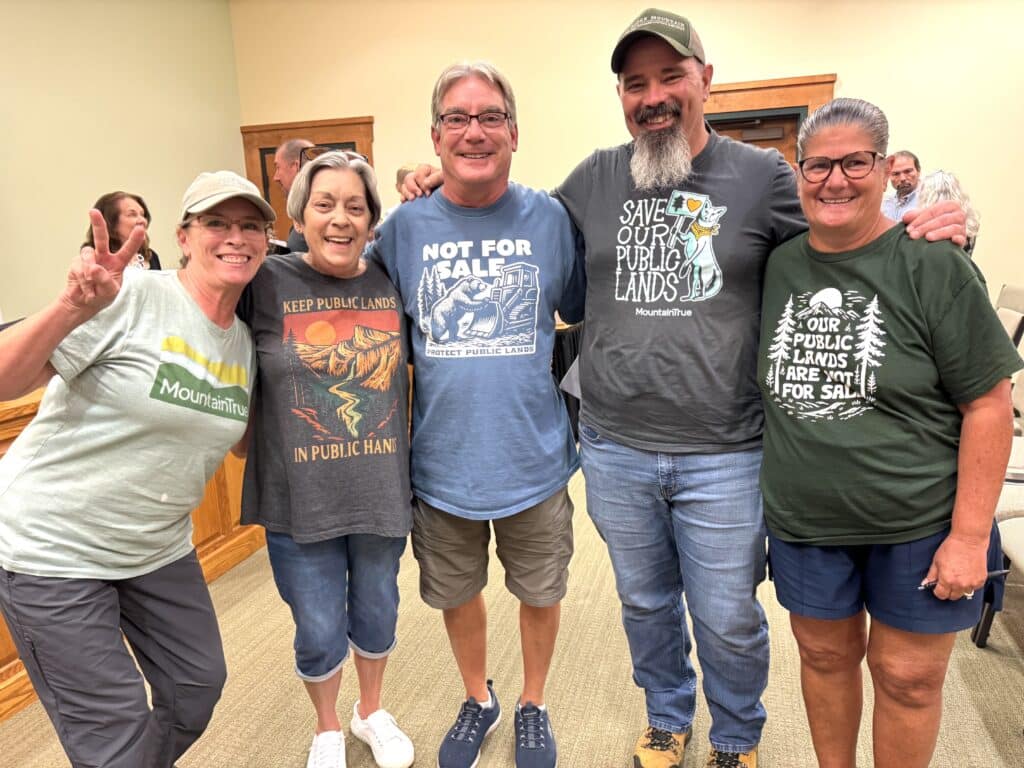
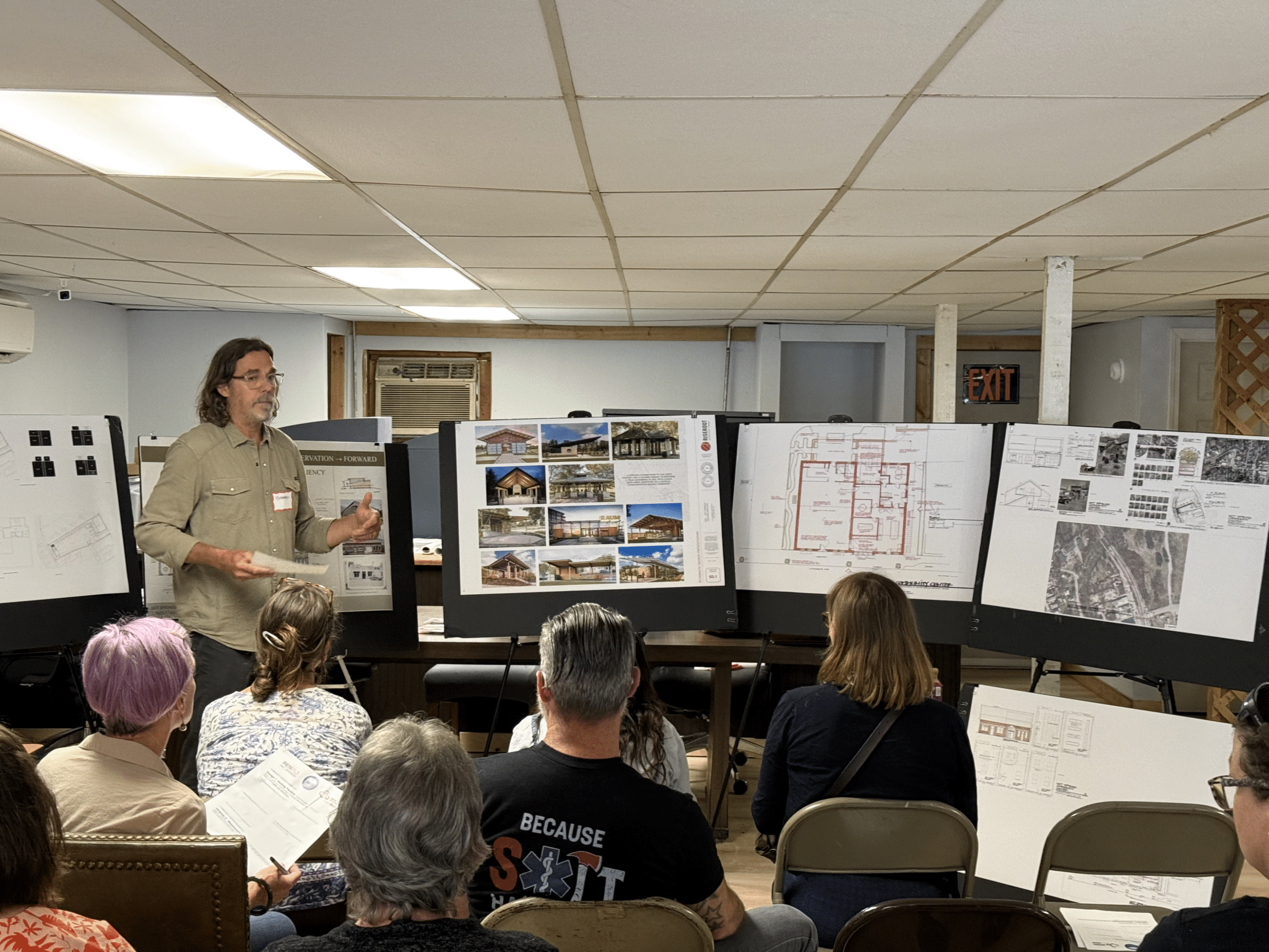
Two community events took place this spring. In March, community members provided input on needs, interests, and stories related to the facilities. Based on that feedback, the Design Team then created concept designs. On May 21, community members gathered for a second public engagement session (pictured above) to review four conceptual design directions developed by the ADC design team. Each concept responded to priorities identified through earlier community input, including a welcoming gathering place, support for local creatives and small businesses, preservation of community identity and history, and flexible space for a range of community needs.
The concepts also addressed key constraints, including flood resilience, ADA accessibility, structural uncertainty, and long-term financial sustainability. Community feedback from the session will help guide the next phase of work toward a feasibility-informed, community-aligned concept framework that positions the Town to pursue implementation and funding.
Bakersville: Creek Walk Design Plan Presented to the Community
In Bakersville, ADC is working with the Bakersville Beautification Association to build on the AIA Architects Foundation’s Community by Design planning process and define a clear, community-informed plan for restoring and strengthening the Bakersville Creek Walk.
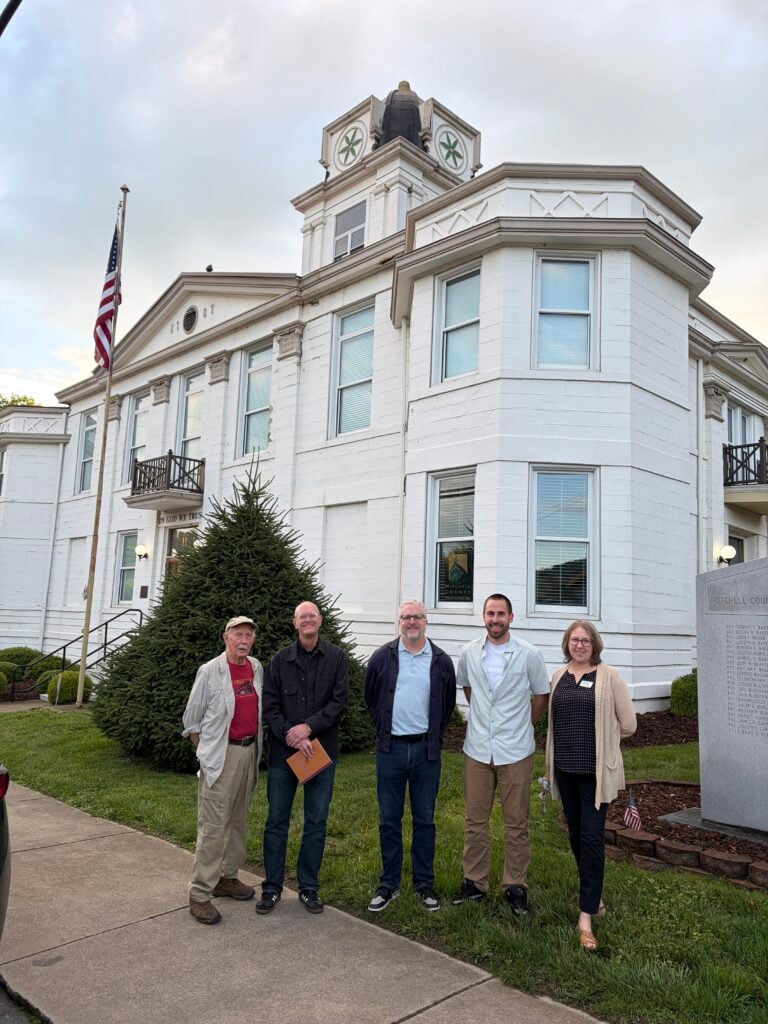
On June 2, the ADC team presented the refined Creek Walk design plan to community members. The plan integrates recovery needs, creek access, walking connections, gathering areas, and long-term maintenance considerations into a concept-level framework for phased implementation.
Community feedback affirmed that the refined design is the right direction for Bakersville, restoring the Creek Walk’s role as a core community asset while creating new and expanded ways for residents and visitors to gather, explore downtown, and connect with Cane Creek. The plan also gives Bakersville the materials needed to pursue funding, coordinate with related town improvements, and prepare for restoration when resources and partnerships are in place.
Marshall: Blannahassett Island Engagement + Design
In Marshall, ADC is supporting work to establish a community-informed, flood-resilient vision for the future of Blannahassett Island as a restored and adaptable public green space.
On June 2, community members gathered for an interactive engagement event to review three concept designs for the island (pictured below). Each concept offered a different approach to priorities such as flood resilience, recreation and play areas, revenue-generating opportunities, wetland restoration, parking, and public access.
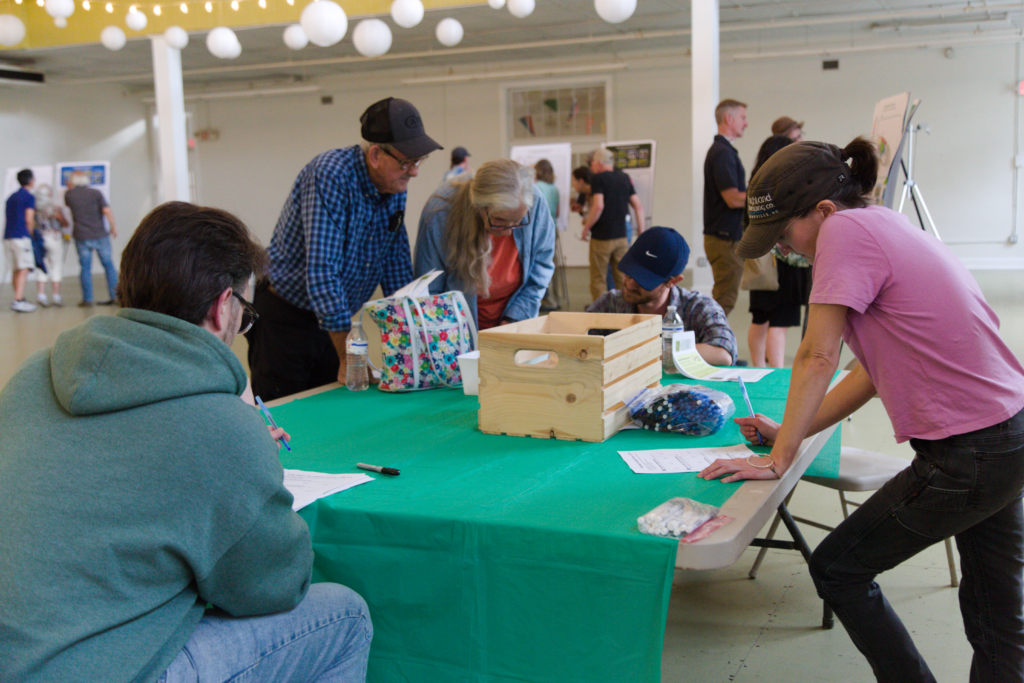
Attendees shared feedback on which ideas should move forward, which elements should be reconsidered, and how different priorities and tradeoffs should be balanced. The design team is now using the input from the engagement session along with their online survey to combine the strongest ideas into a single refined vision that reflects Marshall’s needs, aspirations, and long-term goals for the island.
Moving Local Priorities Toward Project Readiness
Each of these projects is different, but they share a common purpose: helping communities turn local priorities into clearer next steps and stronger pathways to recovery. Through community input and volunteer technical expertise, ADC helps towns develop design guidance that supports funding, partnerships, and the restoration of places that matter deeply to local life.