Project Name: Hot Springs Community Center & Old Jail Adaptive Reuse Project
Location: Hot Springs, Madison County, NC
Type: Restoration and adaptive reuse research and design
Status: Active research and engagement phase
Partners: Town of Hot Springs and ReBuild Hot Springs
Timeline: February – May 2026
Why This Project Matters
Hurricane Helene caused severe flooding and infrastructure damage in Hot Springs, which highlighted significant gaps in community gathering space and small business support. Local leaders identified these town-owned buildings as priority assets that—if thoughtfully restored—can play a central role in long-term economic recovery, workforce resilience, and civic life. This project aims to protect these historic resources while providing flexible shared spaces for the community.
Community Context
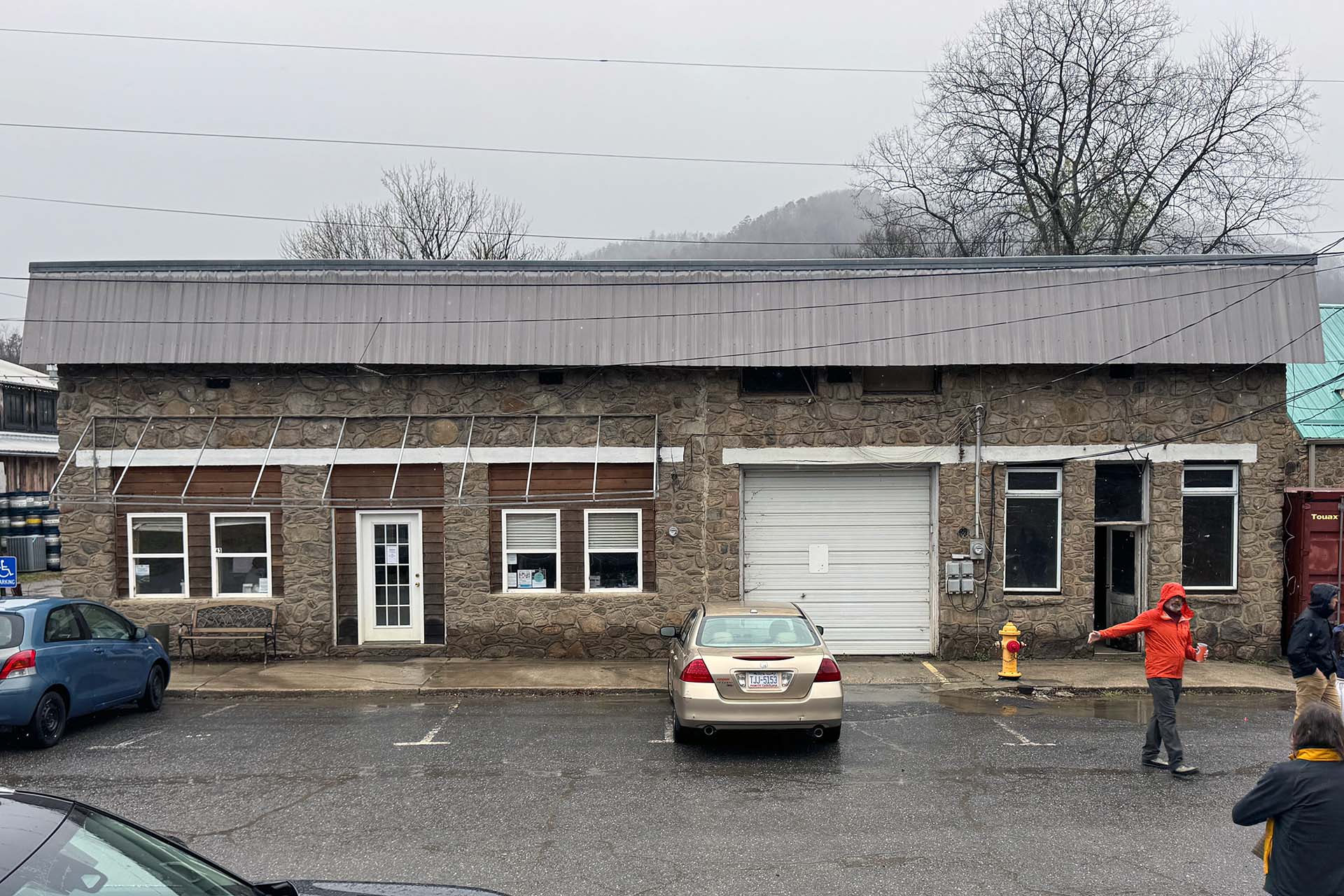
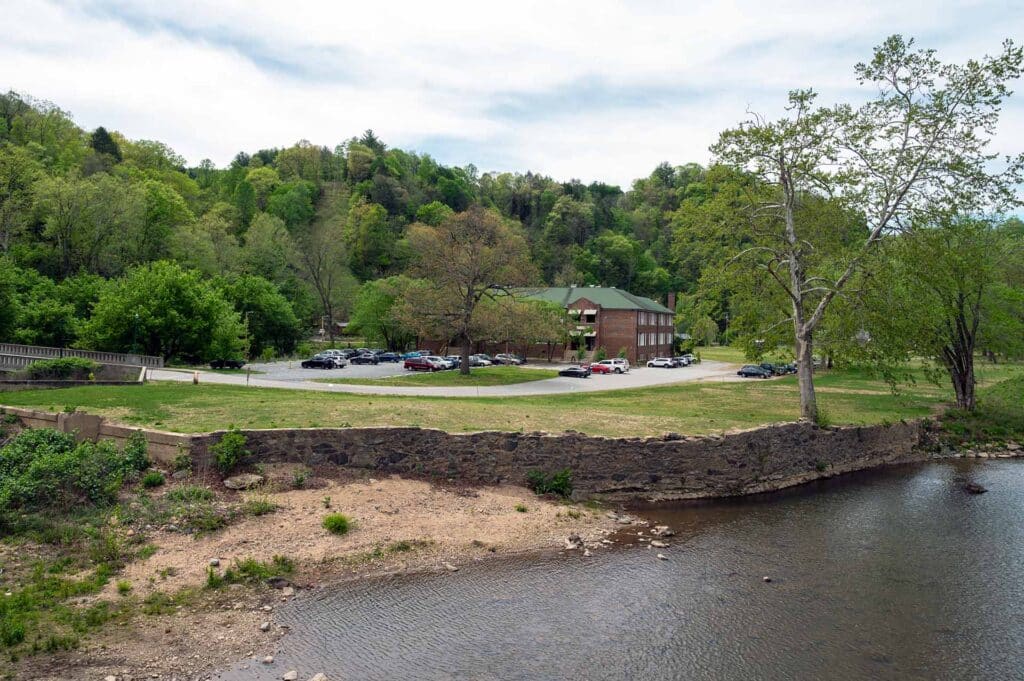
Hot Springs is a small mountain town of roughly 600 residents situated at the confluence of Spring Creek and the French Broad River. Known as a “Trail Town,” its economy is deeply tied to the Appalachian Trail and outdoor recreation. The community is currently recovering from historic flooding that inundated downtown with 4–6 feet of water. The Community Center is presently serving as the temporary Town Hall because the original municipal offices were damaged during the storm.
Project Goals
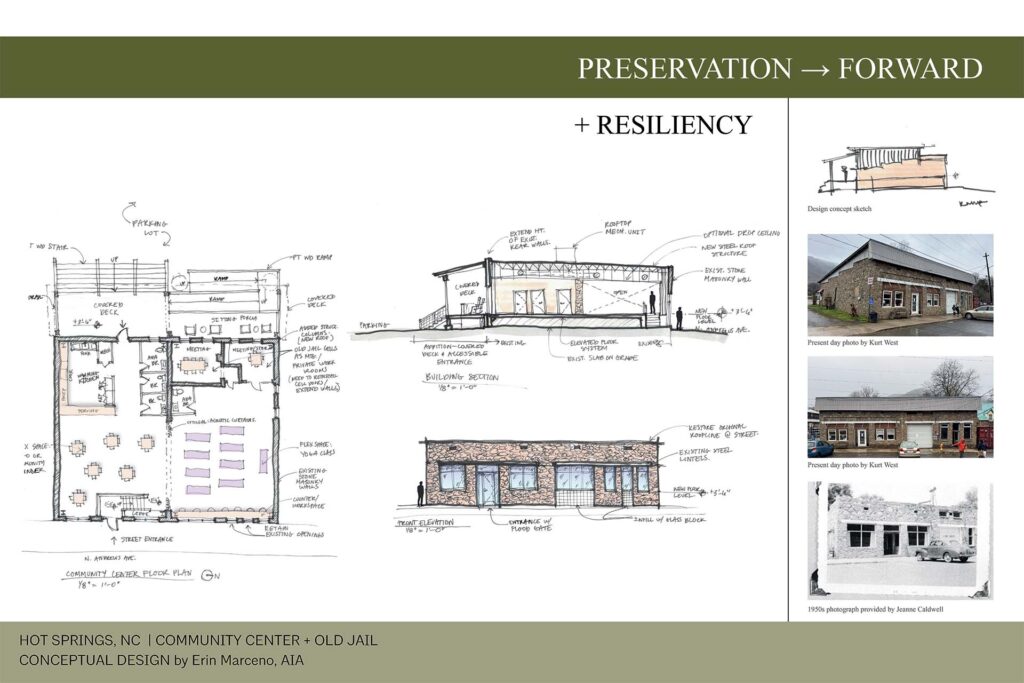
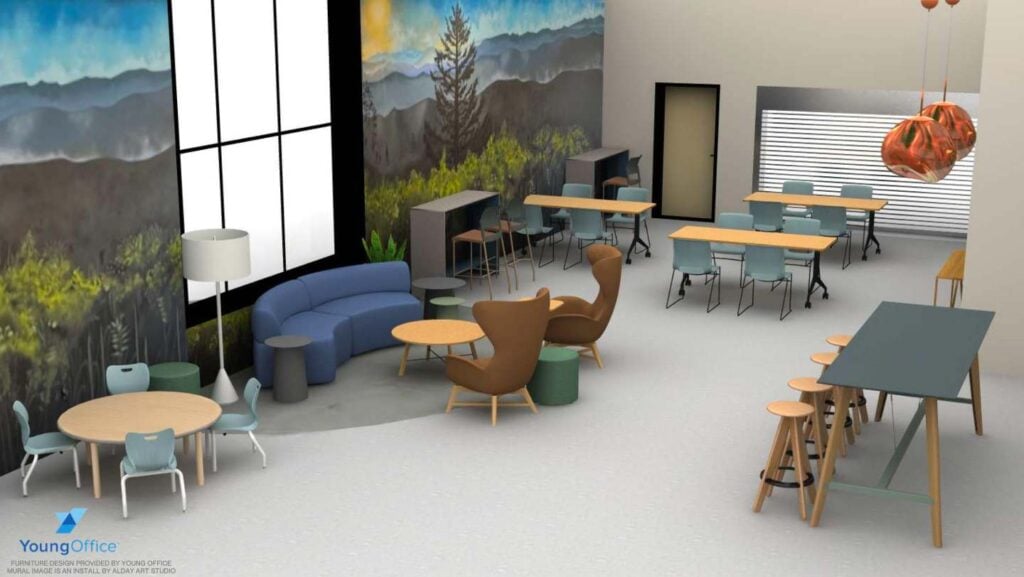
Conceptual Design: Develop plans to restore the Community Center and Old Jail as resilient, community-serving assets.
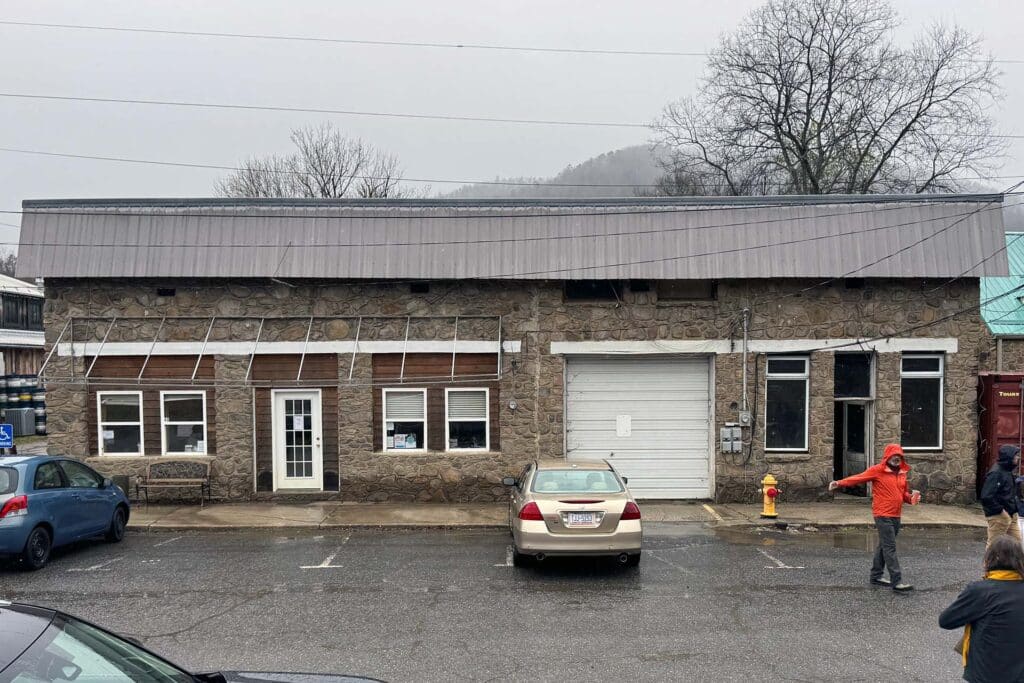
Adaptive Reuse: Explore transforming the historic Old Jail into a coworking space and small business incubator to serve local entrepreneurs and remote workers.
Feasibility Research: Conduct preparatory research on successful rural business incubator models and post-disaster facility redevelopments.
Advance Implementation: Provide the documentation and conceptual materials needed to help the Town advance toward implementation and grant funding.
Community Engagement
The project uses a collaborative, listening-first approach to ensure the designs reflect local needs.
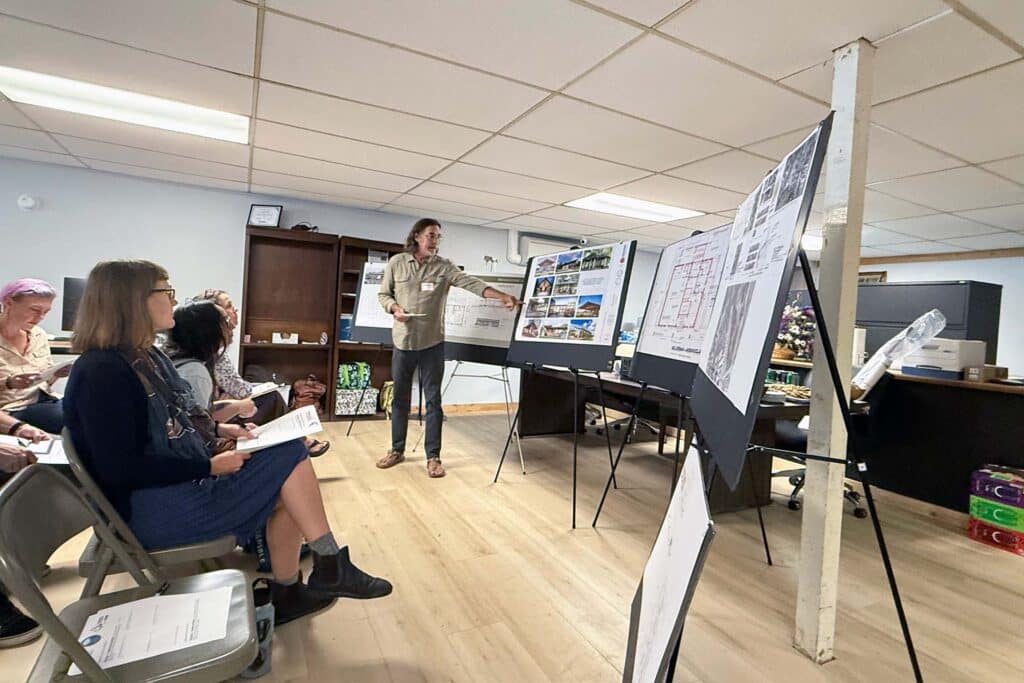
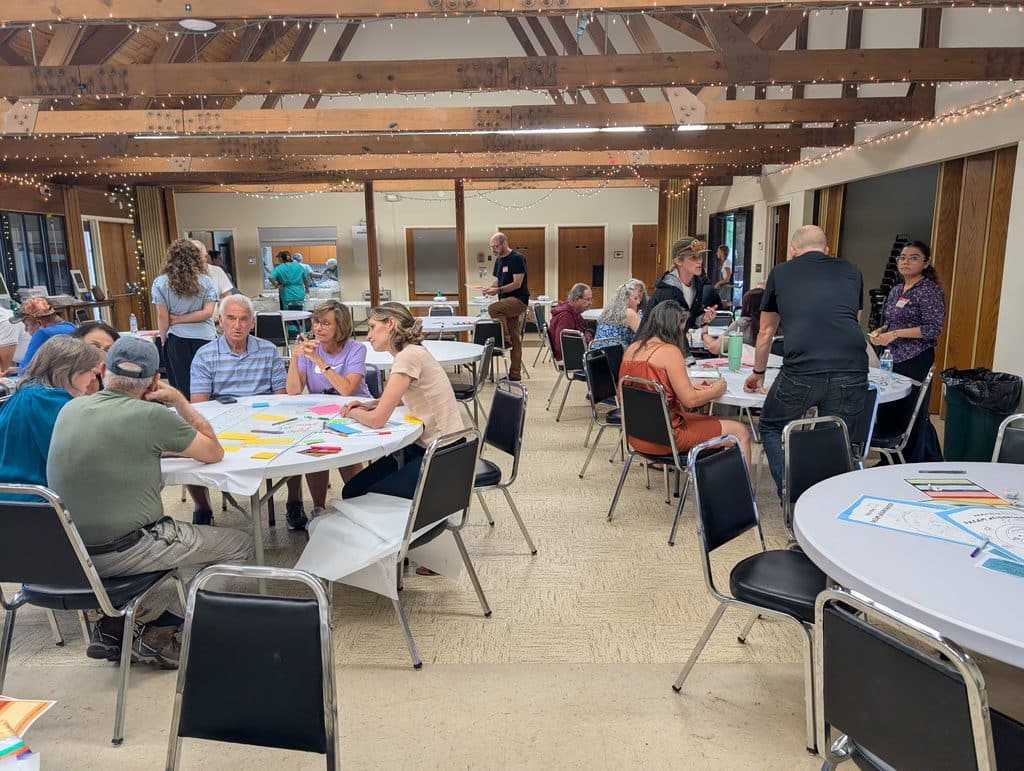
Listening Sessions: Public forums (such as the event on March 19, 2026) invite residents to share stories and visions for the buildings’ futures.
Surveys: Digital and physical surveys are distributed to gather broader community expertise on potential building uses.
Strategic Partnership: ADC is working with partners analyze economic feasibility and business incubator models specifically for a town of Hot Springs’ size.
Design + Approach
The ADC has recruited a multidisciplinary team of professional volunteers with expertise in architecture, historic preservation, and economic development.
Conceptual Level: Designs are conceptual and diagrammatic, focusing on space planning and historic character preservation rather than final construction documents.
Informed Design: Early-stage concepts are directly informed by community input, site visits, and research into peer rural communities.
Progress + Next Steps
Completed: MOU and Scope of Work signed in early 2026; multidisciplinary volunteer team recruited and onboarded.
Current Phase: Conducting building assessments, site visits, and facilitating community input workshops. Second iteration of design submitted for Board Meeting and community discussion.
Next Steps: Supporting the process for application of the CDBG-DR grant program and developing final conceptual space planning options.
Credits
Staff: Julie Judkins (Project Lead), Chris Joyell (Director), Julia Passik, and Emily Coleman-Wolf.
Key Volunteers: Michael E. Bowen, Dennis Turner, Kurt West, Erin Marceno, Arthur Salido, and Joel Osgood.
Partners/Funders: Town of Hot Springs, ReBuild Hot Springs, and Dogwood Health Trust.