Timeline: Planning and design: May – September 2025; Construction Document delivery: September 2025
Why This Project Matters
Following Hurricane Helene, informal resilience hubs emerged organically to meet urgent needs, but these spaces were under-resourced and unevenly supported. This project formalizes that emergent network into a sustainable, “one-stop” resource center designed to provide power, water, and connectivity when formal municipal systems fail. By centralizing information, case management, and resource distribution, the Hub ensures the community is better prepared for future disasters while supporting daily civic life.
Community Context
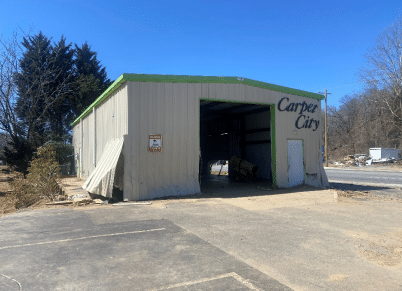
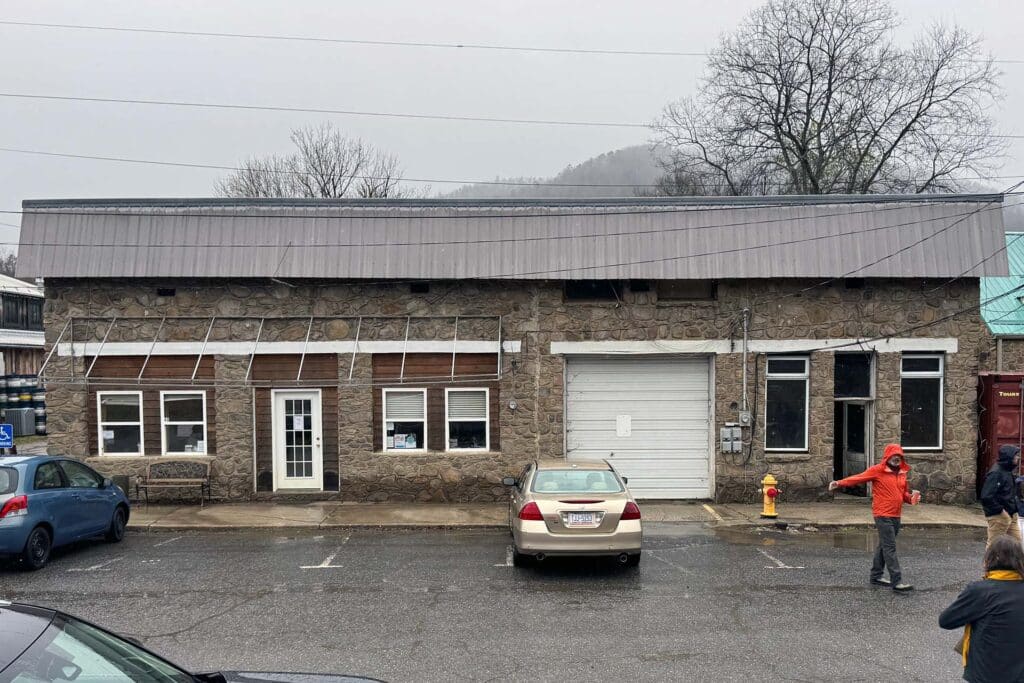
Existing Metal Building to be Renovated
Swannanoa is a historic, unincorporated community with no dedicated municipal government, which has made it difficult for residents to advocate for themselves during the “messy” post-Helene recovery process. The community has a long industrial history and was defined by the flooding of its namesake river. With a significant portion of its residential and commercial base displaced by the storm, there is a critical need for a stable, community-governed anchor to manage recovery efforts and provide essential services.
Project Goals
Functional Multi-Use Space: Transform 1,700 SF of space into a versatile hub including shared office for community needs, case management offices, and community gathering areas.
Equitable Access: Map and formalize the hub network to ensure access to underrepresented neighborhoods, including affordable housing and Latino communities.
Secure Implementation Funding: Utilize completed Construction Documents and a $534,812 budget estimate to secure state and federal recovery grants.
Design + Approach
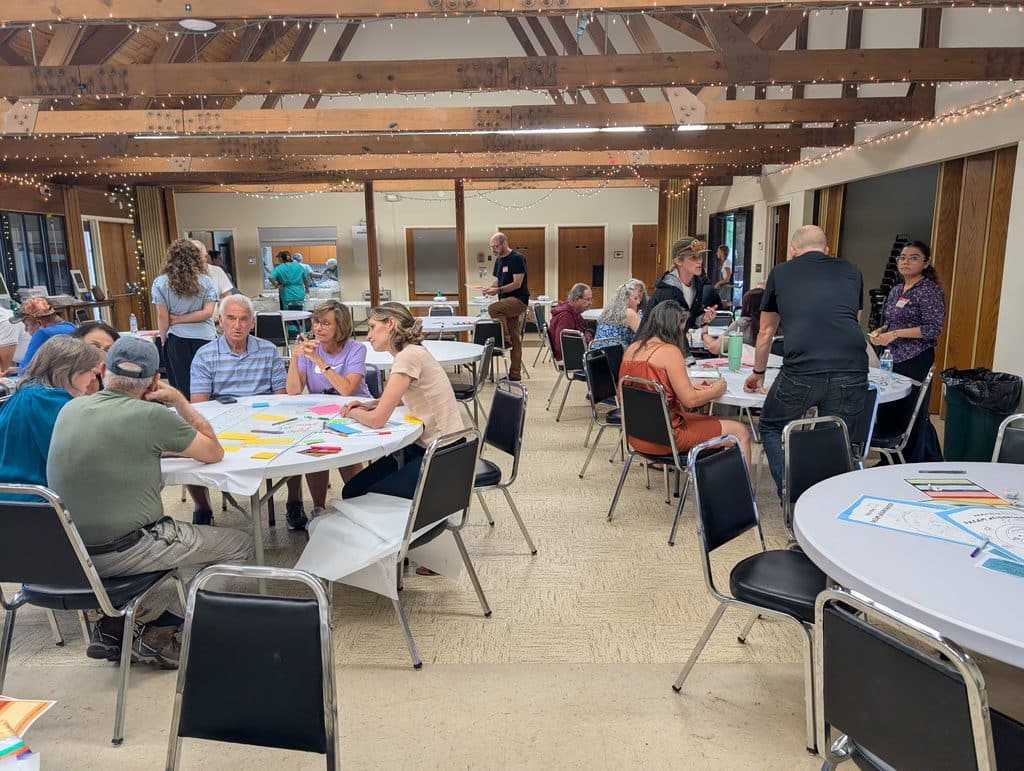
The Appalachian Design Center (ADC) mobilized a multidisciplinary team of volunteer professionals to provide technical expertise.
Adaptive Reuse: The design focuses on the stabilization and restoration of a flood-damaged commercial building to meet codes and accessibility standards.
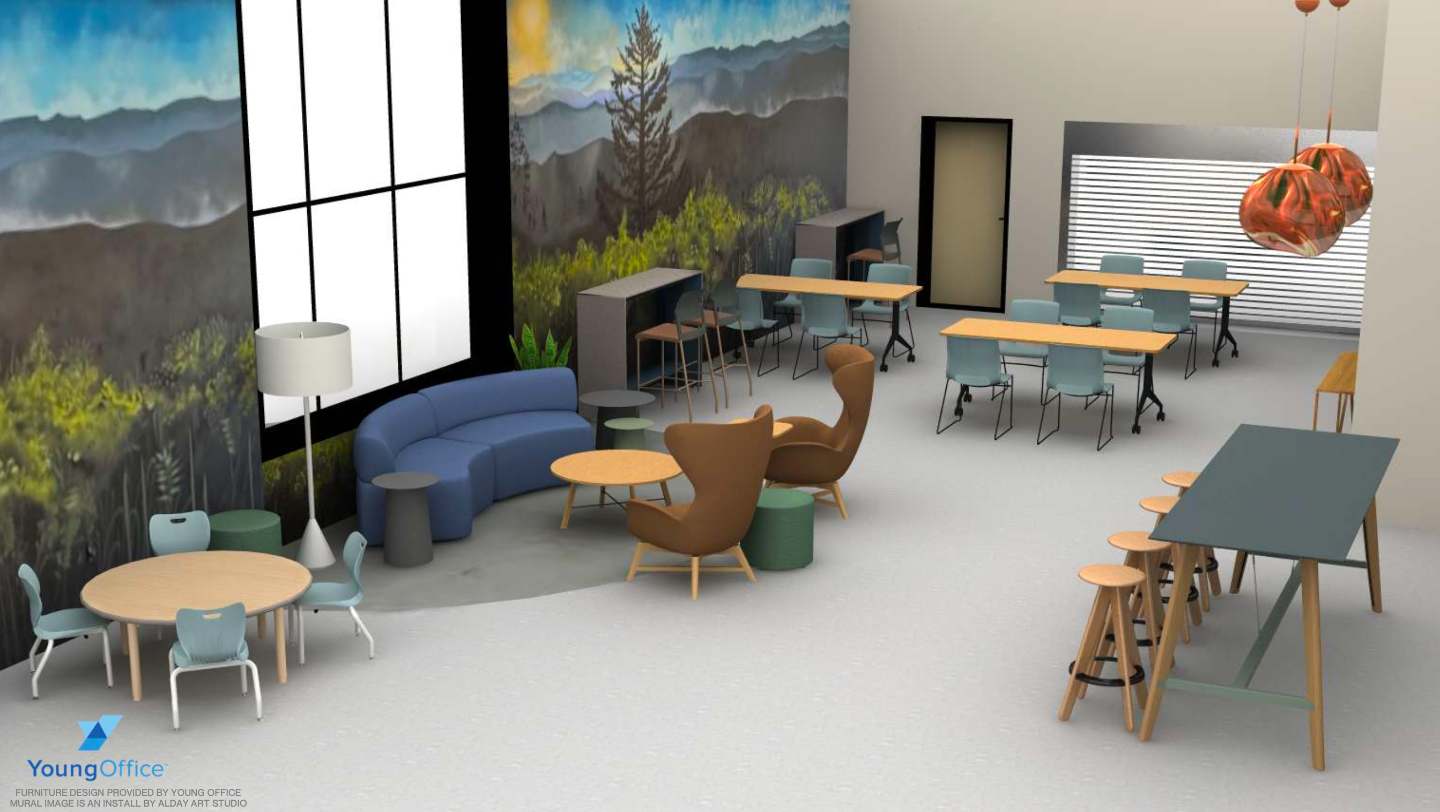
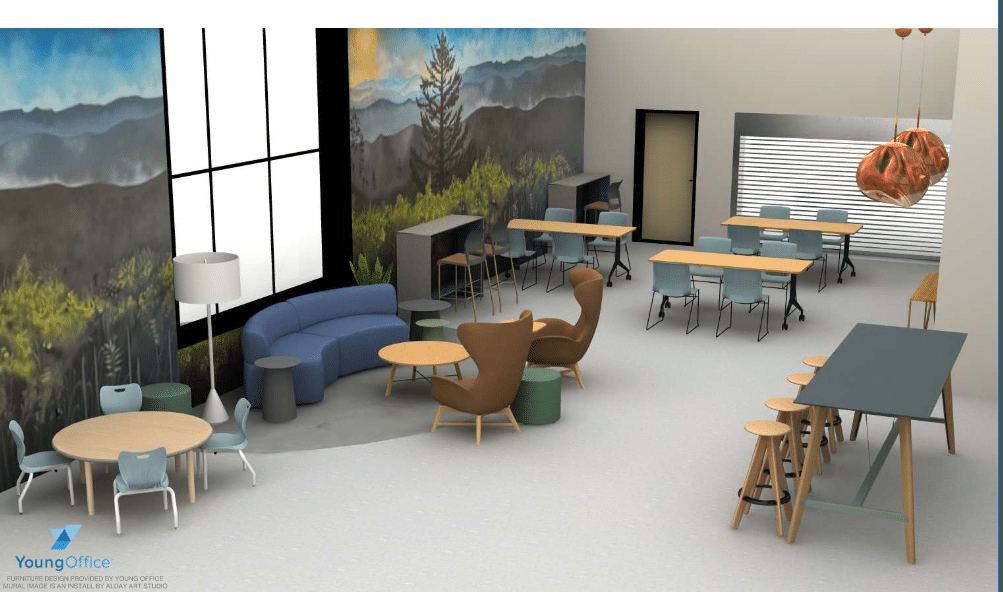
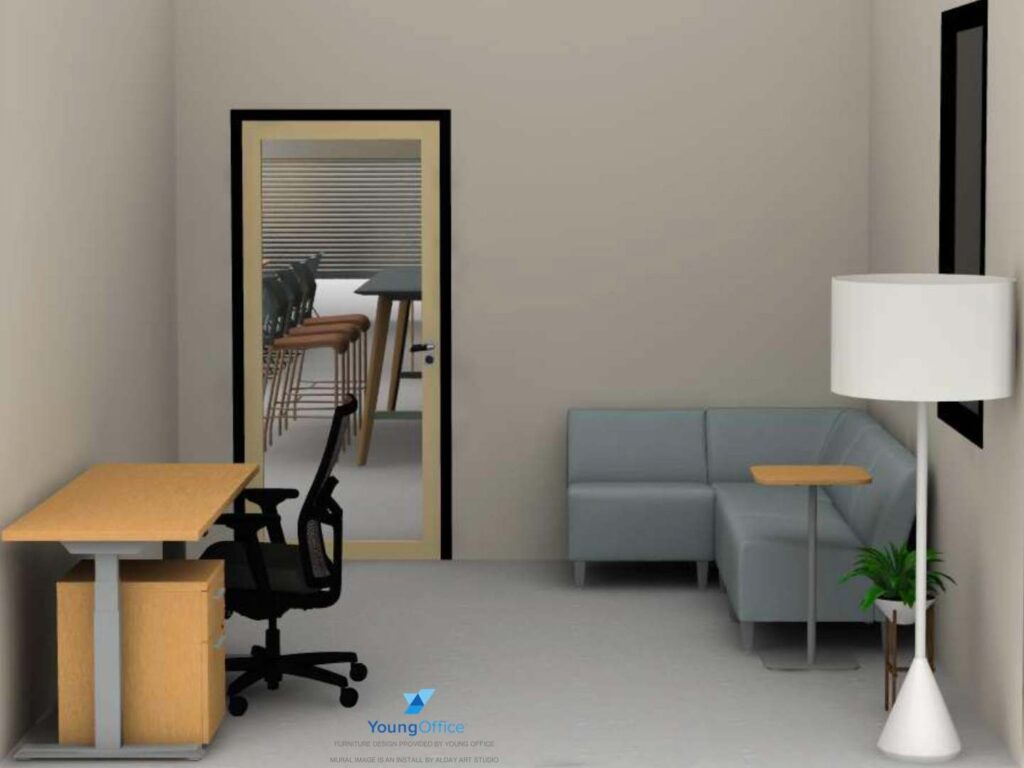
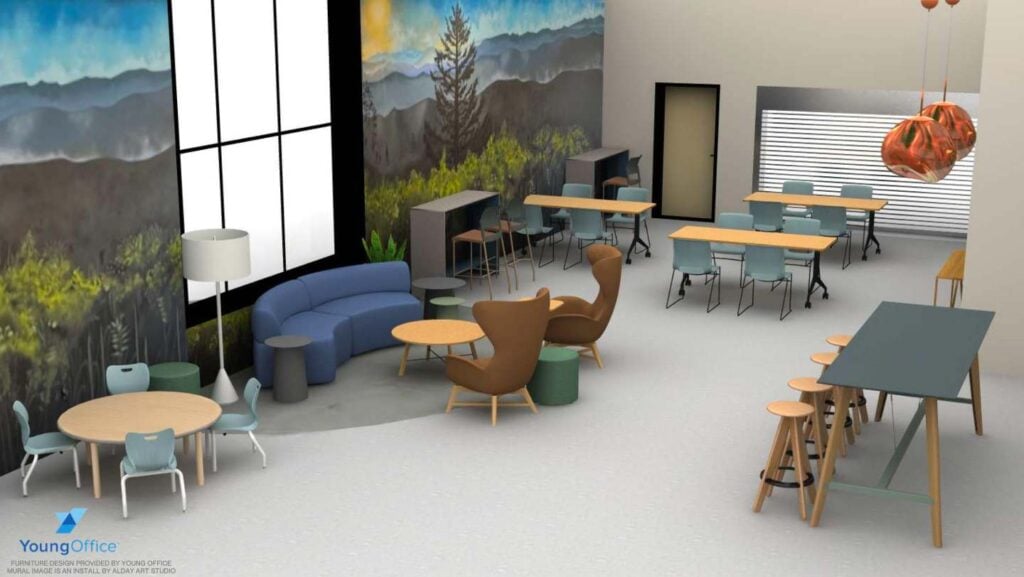
Flexibility: The design focuses on flexibility of space and maximum usability. Offices are designed to accommodate different caseworkers from day to day including different recovery organizations. While large common space easily shifts between private meetings for individuals and families to large group gatherings.
Progress + Next Steps
YoungOffice Rendering
Completed: Engagement summary report; full set of Construction Documents including Site Plans, Life Safety, Floor, Mechanical, Electrical, Plumbing, and Reflected Ceiling Plans.
Current Phase: Evaluating the September 2025 construction budget ($534,812) and identifying capital partners.
Next Steps: Partner with a construction company to manage the construction process including donated materials and volunteer labor. Once a contractor is identified the project can be submitted to Buncombe County for permitting.
Visuals
Credit: Young Office
Architectural Plans: Detailed drawing index (G-000C to A-701).
Structural Repair: Structural design to repair the damaged building.
Furniture: Proposed furniture plans for different arrangements.
Credits
ADC Staff: Chris Joyell (Program Director), Emily Coleman-Wolf (Project Manager).
Key Volunteers: Sarah Howell, AIA, LEED AP of Stehli Howell Design (Conceptual Design); Cynthia Turner, AIA, LFA, LEED AP BD+C of LS3P Architects (Architect); Derek Stewart, MBA PE of Sims Group (Engineer); Jesse Turner, PLA of ISG Inc. (Site Design and Landscape Architecture); Katy Jordan of Young Office (Furniture Design); Aaron Ernst of Blum Construction (Cost Estimating)